
Cartons stop at a labeler while the belt keeps moving underneath them. The leading carton takes the push from the queue, and the same belt must carry the cartons away once the labeler clears.
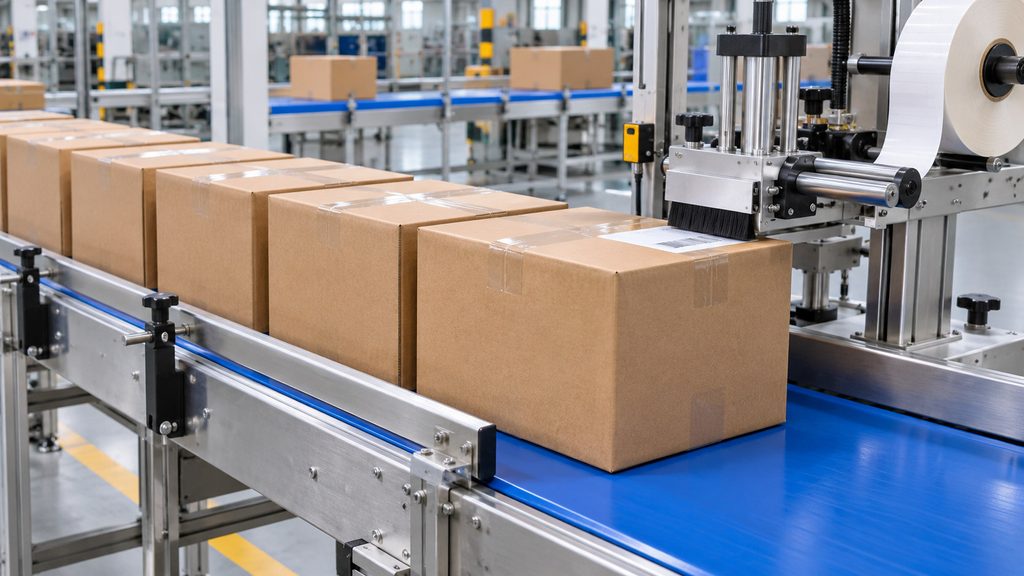
Select an accumulation conveyor belt by identifying what drives the package during conveying, stopping and release. For a carrying belt, check how packages slide on its top face, how its underside runs on the support and how the pulley drives it. For live rollers or controlled zones, match the replacement belt to the original engagement and release mechanism.
What Is an Accumulation Conveyor Belt?
Accumulation buffers products when upstream and downstream equipment run at different rates or when a station briefly stops. The term can mean a belt in direct contact with the goods or a belt that drives the rollers beneath them. Start by identifying the component and observing which surfaces keep moving when a package stops. LKBELT logistics and material handling applications
Which Accumulation Mechanism Is Installed?
On a continuous flat-belt conveyor, a stop can hold packages while the carrying face slides underneath. Each driven package can contribute force toward the front of a contacting queue. A low-pressure design reduces the force transmitted during buffering. Ask which part of the installed design limits it. A roller-based system may limit drive engagement, while a chain system may use rolling elements to reduce drag under a stopped product.
A belt-driven live roller conveyor carries the load on rollers and transfers power through a separate belt. That arrangement can be continuously engaged or controlled by zone. In one zero-pressure design documented by Honeywell, the drive disengages from rollers in successive zones, allowing an item to coast to a stop. In zero-pressure accumulation, sustained driving pressure is removed, and items may coast into contact. Zero-contact accumulation uses controlled stopping within zones to maintain separation. Both behaviors depend on the conveyor design and its controls. Confirm the required stop and release sequence when specifying the replacement drive belt. Honeywell guide to selecting an accumulation conveyor
Modular chain and roller-top systems have their own engagement geometry. Span Tech describes Tube Top and roller-chain options to reduce back pressure in its accumulation equipment. Identify the chain series, sprockets and support arrangement before sourcing a replacement for that kind of machine. Span Tech accumulation tables
How Does Belt Surface Friction Affect Back Pressure?
When a carton stops on a moving belt, sliding friction continues to push it downstream. When contacting cartons accumulate, the force at the stop depends on the number of cartons still being driven and how each bottom interacts with the belt. Queue duration adds sliding exposure and can increase scuffing or wear. Observe sustained queue force separately from impacts when cartons arrive or merge.
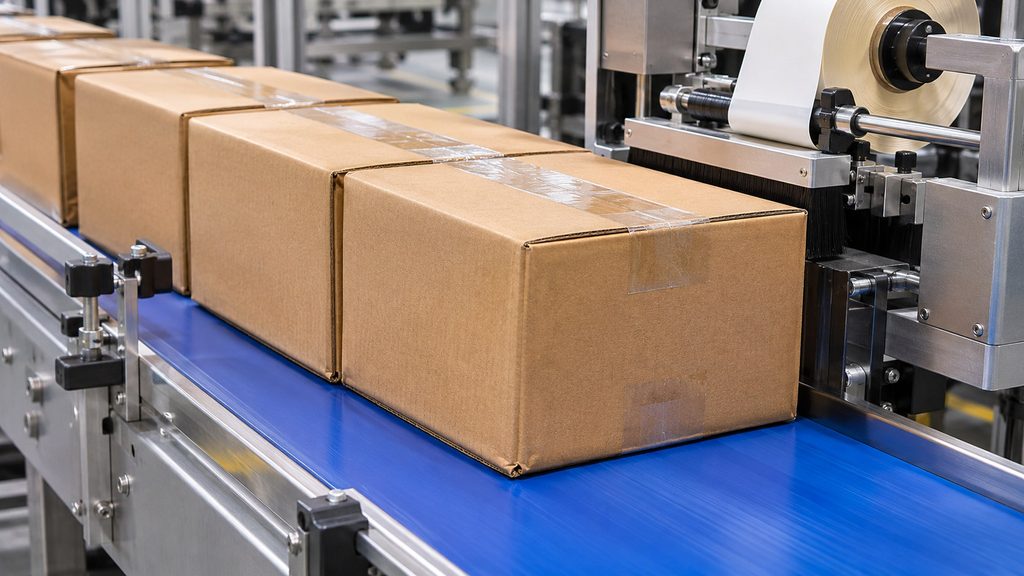
Check holding, sliding and restart behavior with actual packages. A surface that moves a carton reliably may mark its print or label while sliding beneath it. A different finish may ease sliding yet leave a light carton behind when the stop opens. Use the real bottom panel, including tape, seams or feet, and record dust or moisture that normally occurs. Agree with the equipment team on how to assess queue force and acceptable product movement.
Why Does Underside Friction Matter?
On a slider bed, the belt underside slides against a continuous support. Record the bed material, finish, loaded width, load distribution, speed and operating tension. Check where debris collects and compare the condition of the running face and the bed. Drag at this interface can increase drive load and frictional heating. Uneven deposits, wear or support contact also deserve inspection when tracking changes under a loaded queue. A roller-supported belt has a different support interface and still needs the correct stiffness and support spacing. Slider-bed and roller-bed compatibility
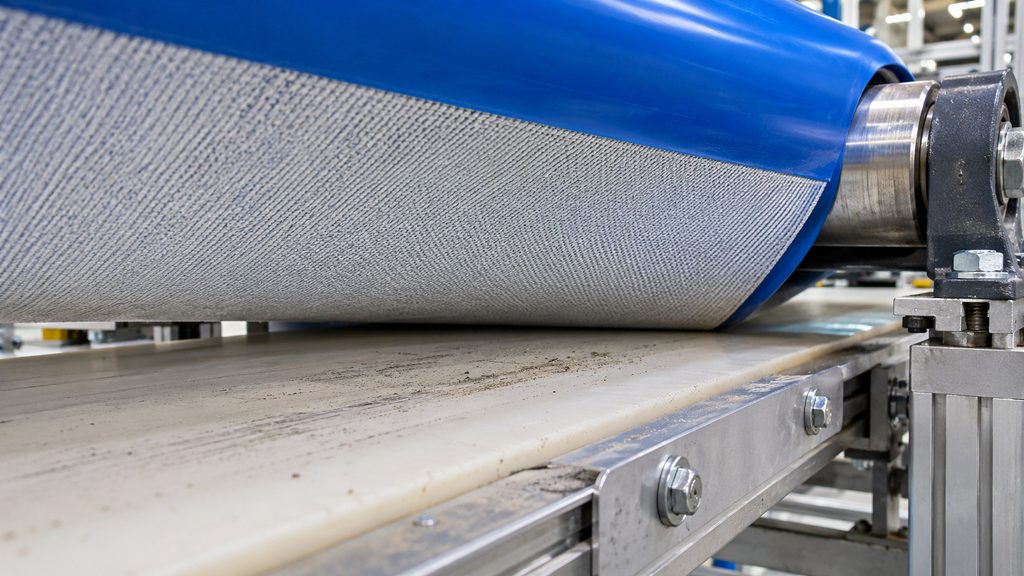
Package friction, support friction and drive traction are separate checks. Forbo’s Transilon accumulation guidance specifically addresses friction at both the top face and the underside, along with stiffness for wide belts and side loading. A belt that slides readily over the bed still has to transmit drive torque at the pulley. Review wrap, lagging, tension, drive arrangement and wet or contaminated conditions with the equipment team. Confirm the acceptable drive load and traction for the offered belt through the installed duty. Forbo Siegling Transilon accumulation belts
Which Belt Surface Is Suitable for Cartons, Bags and Totes?
For cartons, examine the bottom panel and any tape or label that touches the belt. For bags, include the seams, folds and exposed film that might catch at a joint or transfer. Test totes with their actual feet or runners. Run light, heavy, short and tall items that represent the range. Look at scuffing, snagging, sideways movement, tipping and whether items move cleanly when released. Include mixed queues if the line normally builds them.
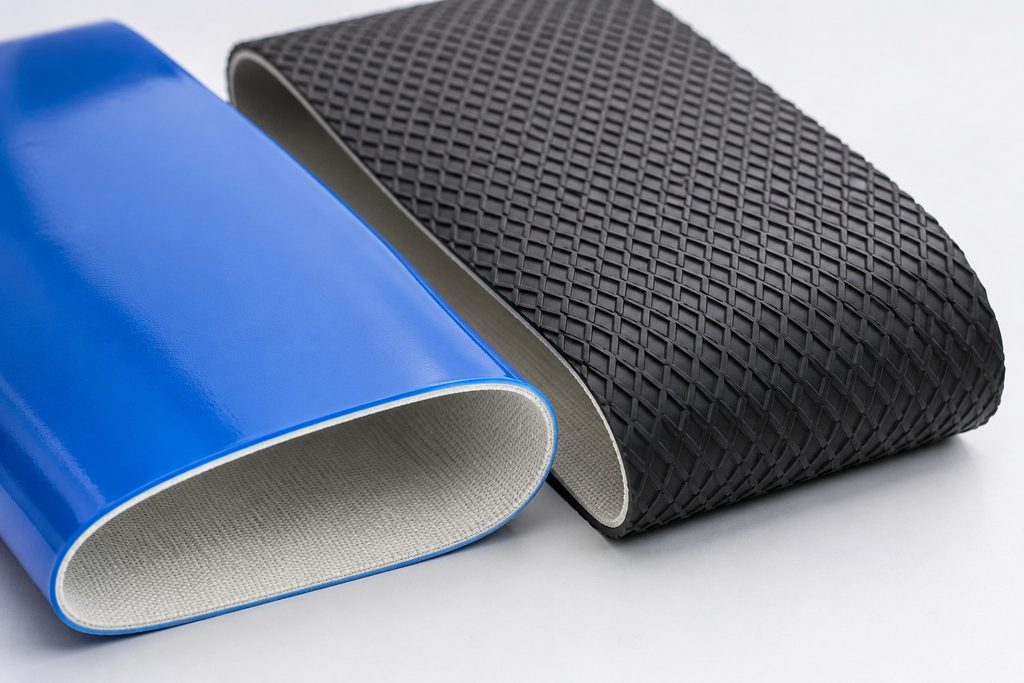
LKBELT’s blue PVC flat conveyor belt is shown with a blue glossy carrying surface and a fabric underside. Confirm both faces of the offered belt against a sample or construction drawing. For contrast, LKBELT identifies PB22-TA18-B black diamond-pattern PVC belt by model, colour and pattern. Ask how the raised profile contacts the package bottom, especially if the package bears on narrow feet or a seam. These listings help identify different surfaces to evaluate. Use measured behavior with the actual packages and written construction data to judge either offer.
What Changes When the Conveyor Uses Live Rollers?
Trace the power path from the drive pulley, through the narrow belt, to the carrier rollers. Where pressure rollers or an engagement mechanism press the belt against the carrier rollers, record the belt face that touches the rollers and how engagement changes during the stop cycle. The product interacts with the rollers. Surface advice for sliding cartons on a flat belt therefore answers a different question.
Ask the OEM to confirm the drive-belt profile, engagement arrangement and permitted substitute. Observe whether accumulation trouble starts while the rollers are driven, while a zone is disengaging or during release. Delayed engagement, unsuitable roller contact and the control sequence warrant separate checks. A replacement belt can restore a worn drive interface. Achieving the required zone behavior also depends on the equipment and its control settings.
What Belt and Joint Details Matter During Accumulation?
A raised joint can repeatedly pass beneath the same stopped package. Check the seam profile on both sides, the running direction where relevant and clearance through stops, guides and transfers. For side loading or merging, ask how the offered belt stays flat across its width and tracks under lateral force. Inspect guide contact and edge wear with the installed support, particularly where products enter from the side. Use the supplier’s splice selection for the exact belt and route. Conveyor belt splice types
Accumulation Conveyor Belt Selection Matrix
| Conveyor situation | Critical interface | Selection priority | Buyer verification |
|---|---|---|---|
| Running flat belt under stopped goods | Package bottom and top face | Controlled sliding, surface wear and reliable release | Representative queue, stop force, package marking and restart |
| Slider-bed carrying belt | Underside and bed | Compatible running face and acceptable drive load | Bed material and condition, loaded drive behavior and belt wear |
| Live roller conveyor | Drive belt and carrier rollers | Correct face, pressure and engagement | OEM belt reference, support and engagement geometry |
| Zone-controlled conveyor | Zone drive and release sequence | Compatible component and controlled stopping | OEM timing, stopping behavior and release under mixed loads |
| Modular or roller-top accumulation | Product and rolling elements, chain and drive | Correct series and support system | OEM part, sprocket match and product behavior |
| Side transfer or merge | Carrying surface, edge and lateral loading | Stable tracking and sufficient transverse stiffness | Loaded side-transfer trial, joint and guide clearances |
Two Practical Industrial Scenarios
Cartons accumulating before a labeler
Suppose filled cartons with taped bottoms queue while the belt continues moving. Maintenance finds scuffing at the stop and hesitation after release. Record the actual queue length and dwell, and establish whether the marks appear at the belt, between cartons or at the stop. Compare candidate belts with the same cartons and equipment settings. Include the longest normal stop and check the leading carton, restart movement and drive load. Inspect the candidate underside against the existing bed as part of the trial. Agree acceptance limits and the inspection method before ordering.
Distribution line with live rollers
Suppose totes queue on a roller conveyor and some hesitate on release. Identify whether the replacement is the drive belt beneath the rollers and whether the zone uses pressure rollers or another engagement method. Ask maintenance to record whether the affected rollers turn before, during and after the release command. Check the original belt reference, pulley path and engagement travel. Compare an approved replacement under the normal tote range and release sequence. If disengagement or release timing is out of specification, have the equipment team address that alongside the belt review.
What Should Buyers Specify Before Ordering?
Give each supplier the same machine position, duty and approval criteria. Include:
- Machine and mechanism. Manufacturer, model, belt position and original reference. Identify what stays driven while products stop. Attach the drawing revision and photos of the support, pulleys, transfers and controls or engagement hardware where relevant.
- Product range and cycle. Bottom material and shape, package dimensions and minimum and maximum mass, speed, spacing, queue length and count, stop duration and frequency, release sequence and any incline or side transfer.
- Finished belt and running conditions. Length and measurement basis, width, thickness, top face, underside, joint and installation access. Specify tracking features, bed material or roller details, drive wrap and lagging, operating tension where known, and debris, dust or moisture. Include photos of wear and package damage.
- Trial and purchasing terms. Request a sample or first finished belt, state quantity and delivery needs, and agree which product and operating combinations the trial covers. Ask suppliers to identify deviations and state the construction and installed duties their offer covers.
At receipt, verify dimensions, both faces, seam and tracking features against the approved drawing. During the trial, record queue force where specified, package condition, restart and tracking, plus any unusual drive loading or heat. Retain the accepted construction and trial settings for repeat orders.
Frequently Asked Questions
Is lower friction always better?
The carrying face needs enough traction for normal movement and predictable sliding during stops. The underside and pulley each have their own requirements.
Can a flat PVC belt be used for accumulation?
Evaluate the exact cover, underside and joint on the installed conveyor. Use representative packages and the normal stop and restart cycle.
What creates back pressure in a stopped queue?
A surface or roller that keeps driving a stopped package can transmit force into the queue. The drive arrangement, contact conditions and number of driven packages influence that force.
Can a belt change create zero-pressure accumulation?
Zero-pressure behavior depends on how the system removes driving force from occupied zones. Confirm that sequence with the OEM.
What should I send for a live-roller belt replacement?
Send the original belt reference, dimensions, pulley and roller arrangement, engagement hardware and the sequence used to stop and release a zone.
Conclusion
Identify the accumulation mechanism first, then specify each contact the belt must handle. Check the carrying surface against the package, the running face against the support and the drive interface through the full stop and release cycle. Confirm the finished construction by drawing and representative trial.
For a replacement quotation, send LKBELT the original belt reference, installed support and drive details, package range and accumulation cycle.