
Conveyor Belts for Logistics & Material Handling
Select around the package, conveyor position and operating cycle. Compare belt requirements for warehouse transfers, parcel handling, inclines and downstream packing lines.
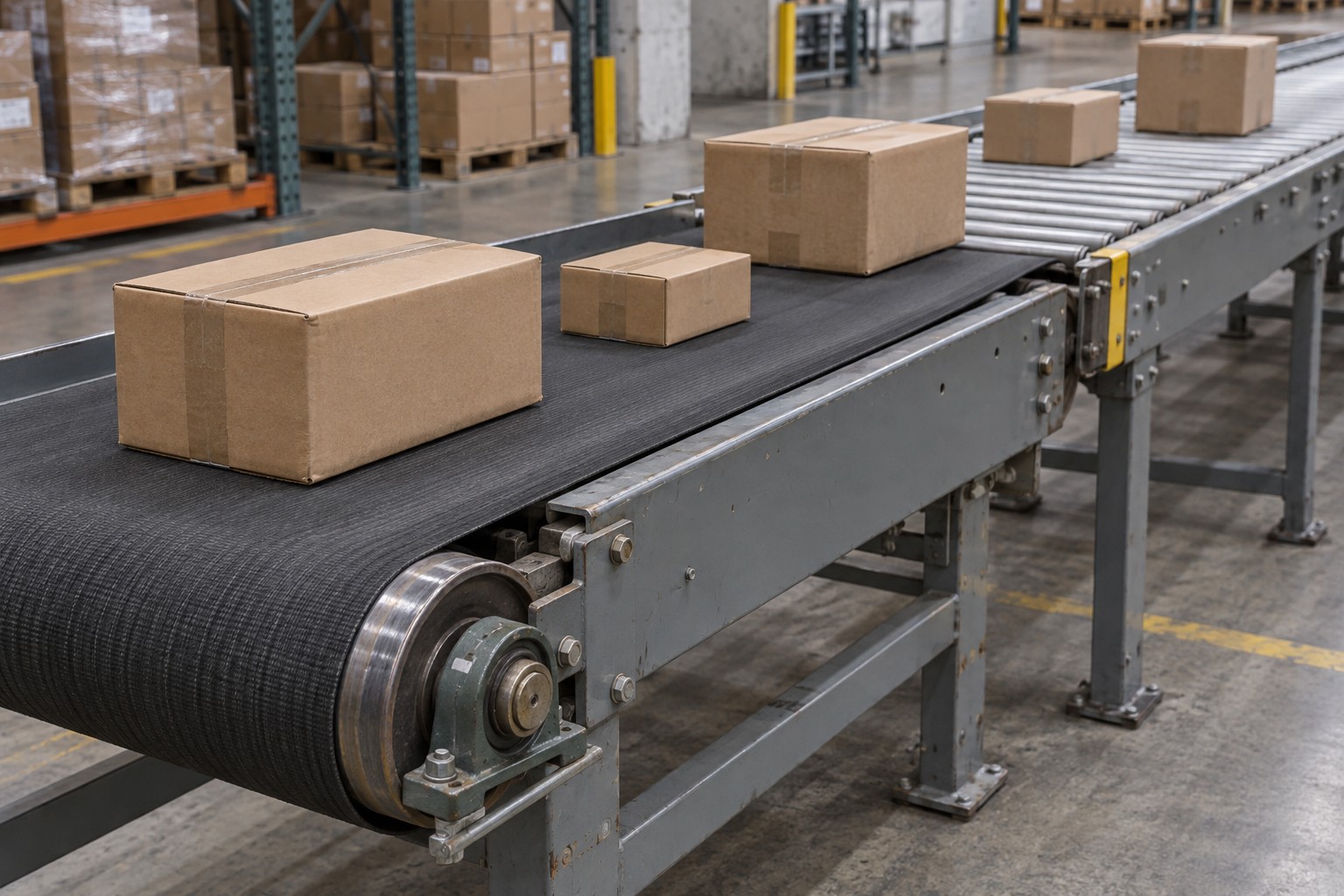
Map the package route through the facility
A distribution line changes duties as parcels move from loading to separation, conveying and dispatch. Document the package range and the exact conveyor position instead of selecting solely by belt colour or thickness.
Identify whether the belt carries the package, drives rollers or forms part of a specialist sorting module. Each function has its own contact, drive and dimensional requirements. Keep the original reference and conveyor drawing at the centre of the replacement review.
Induction & loading
Record how packages land on the belt and the condition of their undersides.
Straight conveying
Review support bed, load distribution, transfers and continuous duty.
Inclines & transfers
Describe direction, slope, package spacing and start/stop behaviour.
Packing & dispatch
Identify accumulation, stop points and handovers to downstream equipment.
Treat carrying and driving belts separately
| Machine position | Belt duty | Selection priorities |
|---|---|---|
| Straight parcel conveyor | Carries cartons, bags or totes over the defined support. | Load range, underside, speed, support friction and transfer. |
| Incline or decline | Controls movement of packages on a sloped conveyor. | Slope, friction, package stability and stopping behaviour. |
| Live roller drive | Transmits movement to rollers rather than carrying parcels directly. | Original section, roller arrangement, drive load and pulley path. |
| Sorter or merge module | Moves or redirects packages within a dedicated mechanism. | OEM drawing, belt position, motion, clearances and matching requirements. |
Connect the application to the belt construction
Our range includes PVK logistics belts, flat conveyor belts and transmission belts. Match the construction to the installed function; specialist sorter components require their own machine reference.

PVK conveyor belts
Specify a PVK belt around your parcel-handling duty, conveyor support, drive and required finished dimensions.
Explore product family
Flat conveyor belts
Review the carrying face, fabric build, underside and joint around parcels and transfer conditions.
Explore product family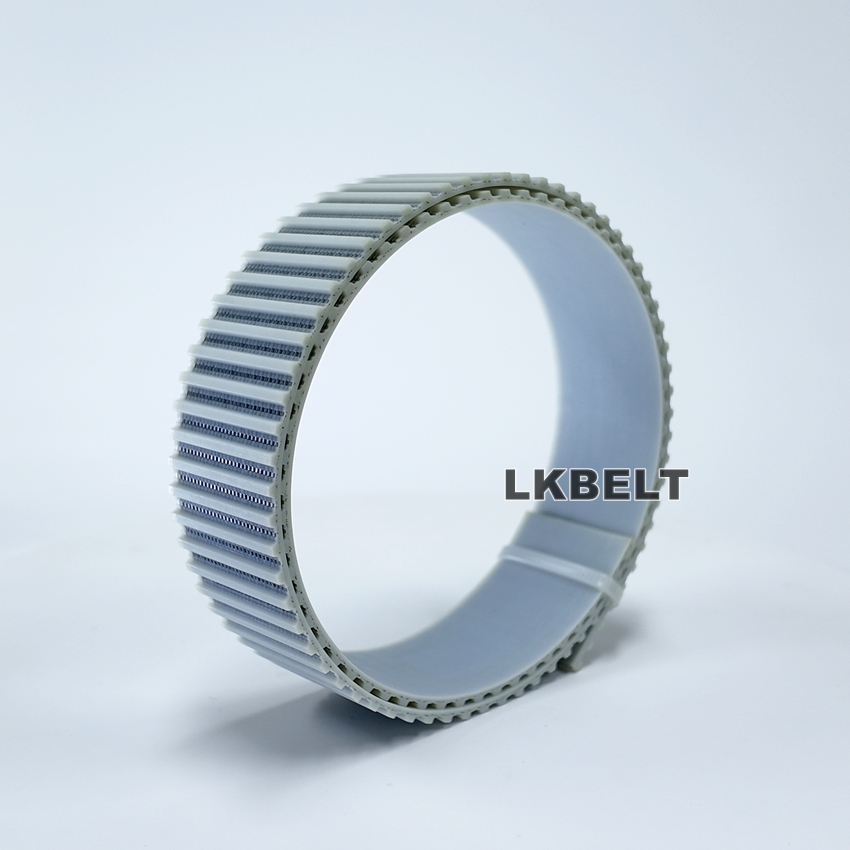
Timing belts
For an existing toothed drive or positioning component, specify the matching profile and complete loop.
Explore product familyA package must work across every handover
Package variation
Record the heaviest and lightest units, smallest footprint and flexible bags as well as rigid cartons or totes. Show damaged or irregular undersides if these are part of normal operations.
Support and underside
A slider-bed conveyor and a roller-supported conveyor present different running conditions. Record the actual support, belt underside and drive so the replacement keeps the intended contact with the machine.
Transfer geometry
Photograph both conveyors at the handover. Include gap, level difference, travel direction and the smallest package; a belt change should be reviewed with the complete transfer arrangement.
Describe the duty across an entire shift
Loading and impact
State the loading method, drop or slide point and maximum package mass. Photograph any concentrated loading area and explain how frequently parcels arrive there.
Starts, stops and accumulation
Record speed, cycle pattern and whether packages stop while the belt keeps moving. Include the intended accumulation behaviour and package stability at restart.
Dust and housekeeping
Describe paper dust, label fragments, tape and debris around the carrying and return paths. Add cleaning method and frequency when reviewing covers, guides and joints.
Electrical or fire requirements
If the project has a conductivity, antistatic or flame-related specification, send the exact requirement and requested evidence. Keep it linked to the selected finished reference and installation.
Choose grip and running behaviour for the position
| Decision | What to compare | What to send |
|---|---|---|
| Grip or controlled sliding | Incline traction against accumulation and release requirements. | Package underside, slope, speed and stop pattern. |
| Cover and construction | Package contact against support friction and installation needs. | Original belt, bed type, drive and working conditions. |
| Joint type | Installation access, bend path and conveying-surface continuity. | Pulley diameters, joint reference and maintenance access. |
| One belt or multiple references | Different positions and duties within the same warehouse. | Position list with dimensions and original codes. |
Record the conveyor and the package range
For multi-conveyor replacement projects, create one reference per position and label the photographs accordingly. Similar-looking conveyors may have different lengths, underside constructions or control requirements.
| Specification | Record this information | Why it matters |
|---|---|---|
| Finished belt | Loop length basis, width, thickness, surface and underside. | Identifies both package contact and machine contact. |
| Conveyor geometry | Centre distances, pulley diameters, bends, guides and support. | Supports review of the installed path and finished joint. |
| Package envelope | Mass range, smallest/largest size, material and underside. | Defines the representative sample for handling evaluation. |
| Operating duty | Speed, slope, loading and accumulation cycles. | Provides the conditions for construction selection and trial. |
Record the position where handling changes
Parcels slipping on a slope
Record the package type, belt condition, slope and event at which slipping starts. Compare dry and contaminated conditions if both occur in normal operation.
Edge wear or tracking changes
Show guides, pulleys and frame contacts along the complete path. Maintenance observations about alignment and loading distribution help distinguish construction needs from installation issues.
Transfer catches or tipping
Include the smallest package and the transfer from both sides. Record gap, height and spacing along with the damage location; evaluate the full handover during the sample run.
Agree a sample review around your process
Approve the position schedule
Agree each conveyor reference, construction, dimensions and documentation requirements. Keep specialist sorter parts separate from general carrying belts.
Check the installed path
Review fit, joint, guides, support and tracking using the conveyor procedure before evaluating package movement. Record the settings used.
Run the package envelope
Include small cartons, heavy parcels, totes and bags relevant to that position. Observe loading, inclines, stops, accumulation and transfers under the intended duty.
Release the repeat order
Keep the accepted reference and trial observations together. Confirm replacement timing, quantity, installation plan and delivery destination for each position.
Warehouse conveyor belt questions
Is PVK the right choice for every logistics conveyor?
Use the original function and construction as the starting point. Carrying, incline, accumulation and specialist sorter positions can need different references even within one facility.
Can one surface handle both inclines and accumulation?
Define the required package behaviour at each position. Grip for a slope and sliding during accumulation are different selection questions, so trial the actual duty and underside.
Does antistatic mean the complete conveyor meets an electrical requirement?
Provide the project requirement and the evidence needed for the selected belt. Review the installed system with the responsible equipment team as well as the component reference.
What helps with multiple replacement sizes?
Send a position schedule with the original codes, dimensions, construction, photographs and quantities. Label each conveyor so references are not mixed.
Can I order from an old belt sample?
A sample helps identify construction and appearance. Add requested new dimensions, machine information and operating conditions because wear and elongation can change the used sample.
Build a replacement schedule for your conveyors
Send conveyor position, original belt reference, finished dimensions, package range and operating duty. Include slope, support arrangement and any accumulation or sorter function.
For a group of conveyors, attach a labelled schedule of sizes and quantities, with destination and required replacement timing.
Send your drawing or original belt reference
Include the quantity, delivery destination, replacement schedule and any sample approval requirements. Clear photographs of the working face, underside and installed position help us review the construction.
Get a Quote