
A conveyor belt suited to sealed bread bags may be unsuitable beneath a dough divider. Sticky dough can behave very differently at the discharge, so selection should begin with the operating conditions at each station.
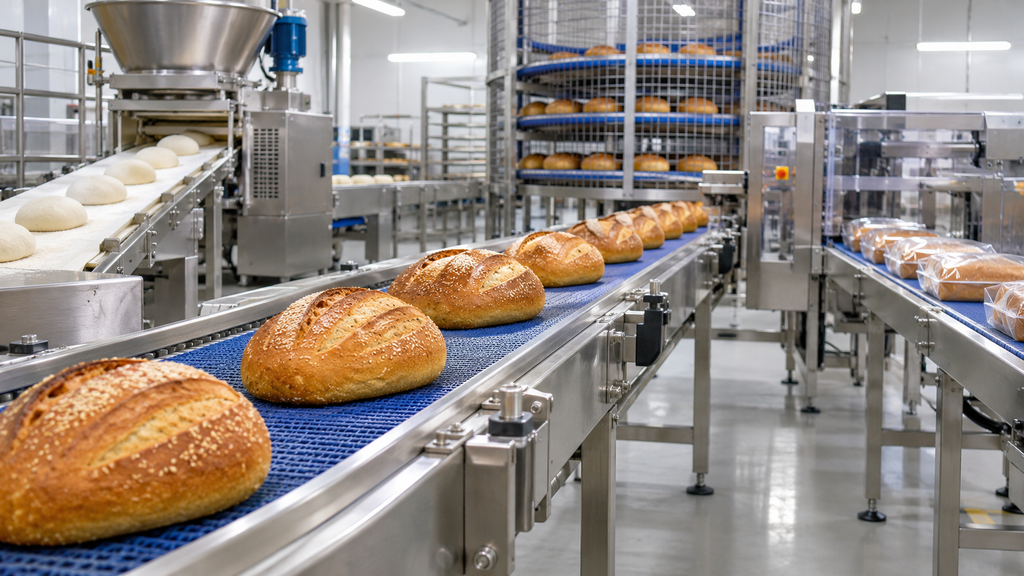
Choose a bakery conveyor belt for the product, transfer geometry and cleaning cycle at its station. Check how the surface grips and releases, what the finished belt and joint can bend around, and which food-contact documents cover the intended use. Specify hot outfeed, cooling, exposed-product handling and sealed-package conveying as separate duties.
What Makes a Bakery Conveyor Belt Different?
A bakery line can ask successive belts to hold a piece of dough in position, release it cleanly, carry it while warm, and keep it aligned for wrapping. The belt under a forming head may need grip while the head works and easy release a moment later. A belt carrying sealed cartons may primarily need stable tracking and predictable movement into an accumulation zone.
Mark these jobs on the line drawing. Identify the first and last point of exposed-food contact and note where temperature, support or cleaning practice changes. The same belt code can appear at several positions on a parts list. Record the duty at each position when deciding whether a proposed substitute can cover them all. LKBELT food processing applications
How Should Conveyor Belts Be Selected for Dough Handling?
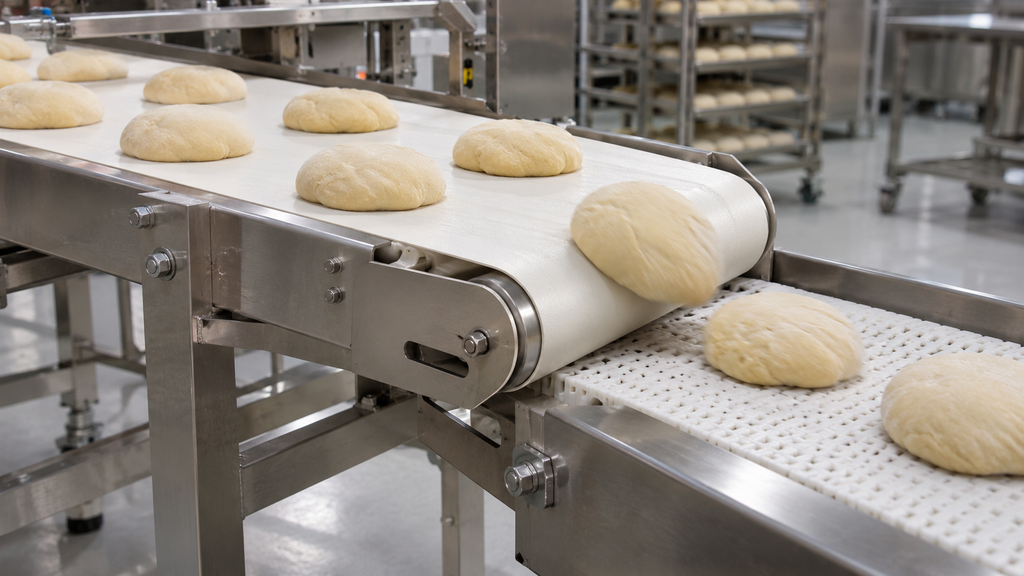
Describe the dough at the belt. Recipe, moisture, flour dusting, oil, temperature and time on the belt can all change the contact. Record any pressure from a gauge roll or forming head. A dough piece pressed into the surface can release differently from one dropped lightly onto the same belt. Describe whether sticking appears along the carrying run, as a piece rounds the nose, at a scraper or after cleaning.
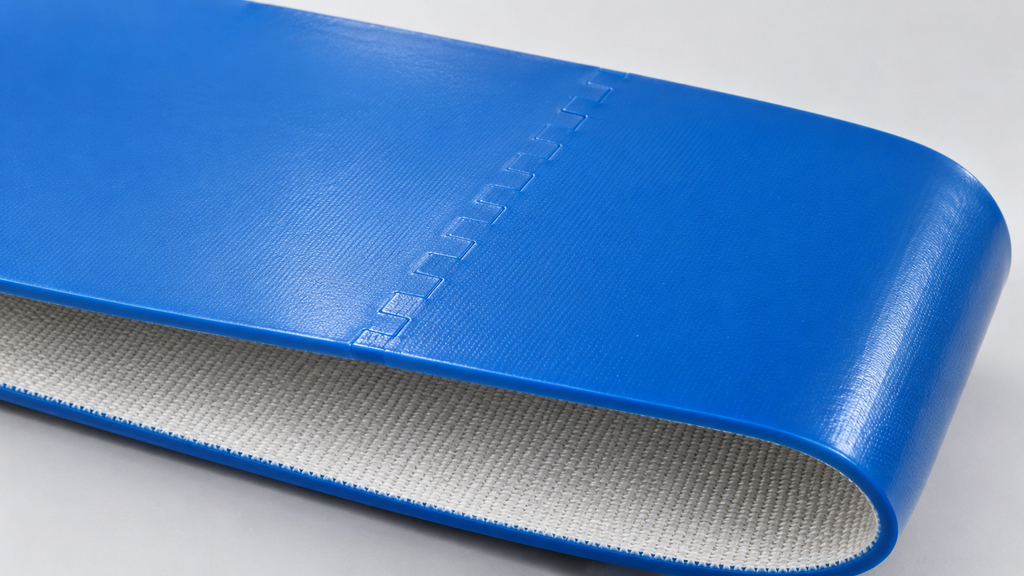
Assess grip through the working section and release at the discharge. A smooth surface may collect a film from the dough. A texture can change the contact area and may hold residue that needs to be removed. Forbo illustrates the two-sided nature of the choice with a dough-processing belt that pairs a release-oriented urethane face with a separately engineered fabric underside. The face and underside address different interfaces on that specific construction. Forbo dough-processing belt example
Compare candidate surfaces with representative dough at the relevant temperature, pressure and flour or oil condition. Agree how to judge early slipping, carryback, shape change and residue, then repeat the comparison after the plant’s cleaning cycle. A flat coupon can help screen surfaces. A trial around representative discharge geometry better shows whether the piece actually leaves the belt at the right point. Record any scraper setting or speed change so the results can be interpreted.
What Matters for Dough and Small-Product Transfers?
A small end radius can help a piece leave the belt and shorten the unsupported gap to the receiving conveyor. Measure the gap and height difference between the running surfaces, then check them against the shortest or most fragile product and its normal orientation. Also record the transfer speed relationship. A piece may clear the gap and still rotate, fold or land against a guide.
Send the actual pulley diameter or nosebar profile and mark whether the belt runs over a fixed nose or a rotating element. Include wrap, return idlers and reverse bends. Confirm the allowable bends for the finished belt and joint, including the belt reinforcement, thickness and any added guide. Check joint thickness and transitions through the nose and under the scraper. The guide to conveyor belt splice types explains how the finished joint profile and local flexibility affect clearance and repeated bending at a transfer. Forbo’s bread and bun guide links small end radii with transfer of formed pieces and describes specific belt and splice options for its systems. Forbo bread and bun production guide
Which Belts Are Suitable for Bakery Cooling Stages?
Measure or obtain the product contact temperature at the first outfeed and record how long hot product stays on the belt. Note radiant heat from the oven mouth, the surrounding air temperature and the expected exposure during slow running or stops. Confirm the limits for the offered construction and joint under those conditions. Forbo treats oven outfeed and oven-internal transport as separate duties in its bakery guidance.
A downstream cooling conveyor may run in ambient air or in a controlled enclosure. Record humidity, condensation, air circulation requirements, product support and cleaning exposure. If the process depends on airflow through an open belt, document the open-area and support requirements with the equipment supplier. A spiral cooler or freezer may need a particular drive engagement, turn geometry and belt series. Supply the equipment model when requesting a replacement.
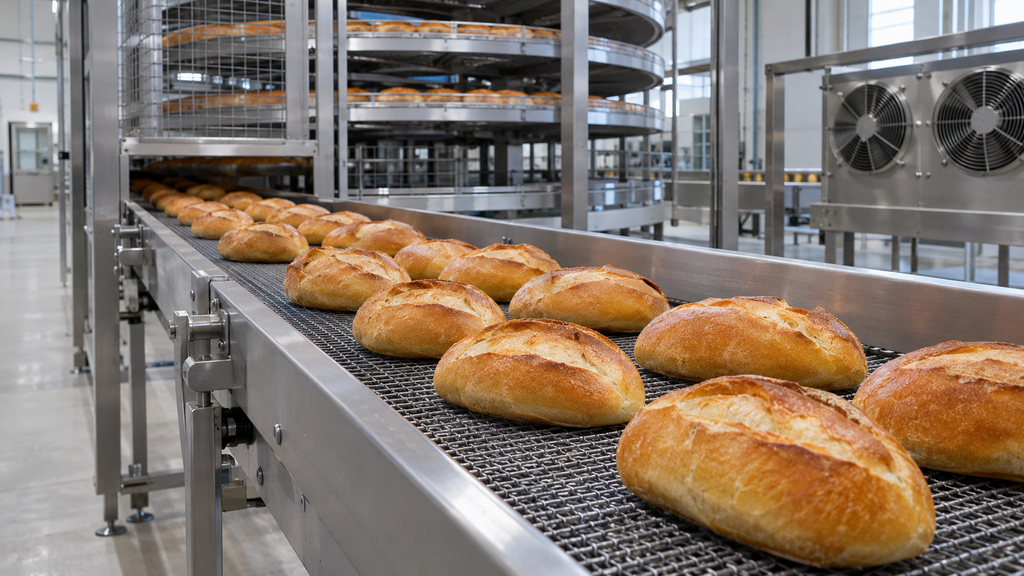
Once products are cool, the selection may depend mainly on stable support, release and keeping crumbs or toppings out of the return path. Oven-internal transport requires a separate thermal and mechanical specification, including the actual exposure of the belt, joint and associated components.
How Do Packaging Conveyor Requirements Differ?
At the wrapper infeed, a bare loaf or biscuit may still sit directly on the belt. Where packaging is open or partially closed, map which belt surfaces can touch exposed food or a food-contact surface of the package. Record guide locations and the support needed to keep the product aligned as it enters the wrapper.
After sealing, specify the actual base of the package, its load, speed, incline and accumulation pattern. A gloss film bag and a corrugated case can behave differently against the same cover. Look for slip when the conveyor starts and drag or scuffing where packs queue. Include any credible exposure from damaged packs or shared washdown. The plant’s hygiene controls still apply through these areas.
PU, PVC, Canvas and Modular Belts: What Should Buyers Compare?
LKBELT shows its transparent PU conveyor belt as pale, translucent roll material and asks buyers to specify the finished dimensions and joint. This is a useful example when a purchaser has a photo and a request for a PU dough belt. Identify the actual grade, carrying face, underside and finished construction first. The page’s separate PU model table lists other options. Match any published specification to its own model before using it for a bend or fit decision. Request release evidence and the documents for the assembly being offered.
The PB10W-FDA white PVC flat conveyor belt provides a second construction reference. The published product name identifies the model and PVC material. For an existing white flat belt, use the part reference alongside a drawing or underside photo to confirm the running face, reinforcement, thickness and joint. The model suffix identifies the product in the catalogue. For direct contact, request the applicable documents and use conditions for the selected build.
For a canvas or other fabric-faced option, ask for the weave and any treatment where they affect release, residue or cleaning. For a modular belt, identify the module series, surface opening, rods and mating sprockets. These construction details determine what can fit an installed machine. Types of conveyor belts
Food-Contact Documentation and Cleaning Compatibility
Start with an actual contact map and the destination market. Identify direct contact with dough or baked goods, possible contact through the process or packaging, and stations that touch sealed packs only. Document food type, time and temperature of contact, and which parts of the assembly could be exposed in service. Ask the supplier how the offered cover, edges, joint and any exposed reinforcement or accessories are addressed in the supporting information.
For U.S. use, FDA guidance explains how to determine the regulatory status of constituents against the intended use and limitations of the relevant authorization. Where a food contact notification is the basis, check whether it covers the manufacturer and use in question. Request documents that identify the selected grade and assembly. A generic label or colour gives procurement too little information to make that review. FDA guidance on food-contact material components
Give the supplier the plant’s approved detergent and sanitizer names, concentrations, temperatures, contact times and frequency, plus rinse and drying practice. Ask about compatibility for the belt, edge treatment and joint over the planned cycle. Include how staff reach the underside, scraper and support bed. Forbo’s food-belt Q&A discusses how release and edge construction relate to cleaning. A line trial should include inspection of the seam, edges and underside after the normal cleaning cycle. Forbo food conveyor belt technical Q&A
Bakery Conveyor Belt Selection Matrix
| Bakery stage | Product and contact condition | Belt selection priorities | What buyers must verify |
|---|---|---|---|
| Raw dough handling | Sticky, floured or oiled dough in direct contact | Working grip, release and residue removal | Representative dough trial, scraper interaction and contact documentation |
| Formed dough or small-product transfer | Shaped pieces or fragile baked goods | Handover gap, product orientation and finished-belt flexibility | End geometry, reverse bends, joint profile and transfer trial |
| Hot post-oven outfeed | Warm or hot product plus possible radiant exposure | Thermal compatibility of carrying face, body and joint | Product contact temperature and time, ambient exposure and assembly limits |
| Ambient or controlled cooling | Product with falling temperature, possible condensation | Product support, airflow where required and cleaning access | Cooling conditions, support layout and equipment-specific engagement |
| Unpackaged product or wrapper infeed | Bare product or potential contact around open packaging | Product alignment, surface behavior and contact suitability | Contact map, finished assembly documents and wrapper geometry |
| Sealed packages and cartons | Film or carton contacts the belt in normal operation | Traction, accumulation and package condition | Actual pack trial, stack or queue loads and cleaning exposure |
Two Practical Industrial Selection Scenarios
Sticky dough at a divider discharge
Suppose a bakery sees pieces of dough wrap partway around the divider discharge. Before ordering a different cover, observe where sticking begins and whether it changes with dough temperature, flour application or the first run after cleaning. Compare the current and proposed surfaces with the same dough, scraper position and transfer geometry. If the candidate releases cleanly, confirm that its finished joint can run around the nose and request documents for the direct-contact duty before approving it.
Cooling to packaging on a bread line
Suppose loaves move from the oven outfeed into an ambient cooling area and then into a bagger. Put three positions on the enquiry. For the outfeed, record peak product contact temperature and radiant exposure. For the cooler and bagger infeed, check support, exposed-product contact and handling as the loaf reaches the wrapper. For the sealed-bag discharge, check film traction and queue behavior with the actual pack. Ask each supplier to state exactly which positions its proposal covers.
What Should Bakery Buyers Specify Before Ordering?
Issue a drawing or marked-up conveyor layout and ask each supplier to quote the same position and duty. Include:
- Station and product. Machine model, belt position, product size and condition, original belt code, speed and load. Identify direct contact or packaged handling and state actual temperature and duration.
- Finished belt. Width, length and measurement basis, thickness, carrying face, underside, joint and edge treatment. Show dimensions and locations for any guides, cleats or sidewalls.
- Machine and access. Pulley diameters, nosebar geometry, reverse bends, transfer gaps, support bed, scraper position and clearance. State whether a closed loop can be fitted and how the underside is reached for cleaning.
- Documents and order. Food-contact documentation for the intended market and exposure, cleaning schedule and chemical details, drawing revision, labelled photos, quantity and delivery requirements.
Ask suppliers to list deviations and agree on how the sample or first finished belt will be accepted. Check identity, dimensions, seam and accessory position against the approved drawing. Agree separately on the product trial, cleaning check and documentation review. A belt can match the drawing and still require a line trial for release at the intended speed.
Frequently Asked Questions
Are all bakery conveyor belts suitable for direct food contact?
Suitability depends on the exact construction, intended contact conditions and supporting documents. Start with the surfaces that can touch the food at that station.
How should I choose between PU and PVC?
Compare exact grades and finished builds against product release, pulley geometry, cleaning and documentation. Ask for the surface and underside details of each proposed belt.
Can a bakery conveyor belt run inside an oven?
Use the oven manufacturer’s specification for internal transport and verify the full temperature and mechanical duty. Outfeed and cooling have their own selection requirements.
What should I check first when dough sticks at discharge?
Locate the sticking point and record dough condition, discharge geometry, scraper interaction and recent cleaning. Compare candidate surfaces under those conditions.
What makes a replacement quotation comparable?
Ask each supplier to quote the same drawing revision, product duty, finished belt construction, installation geometry and documents. Review deviations before approving a sample.
Conclusion
Specify each bakery belt by what happens at its station. Dough release needs a representative trial, transfers need a finished-belt fit check, and exposed-product positions need documents for the intended contact. Carry these requirements through to the drawing and sample approval.
For a replacement quotation, send LKBELT the machine position, original belt details, product contact and cleaning conditions, and drawings or photos of the transfer. Contact LKBELT about a bakery conveyor belt