
A polished strip near a conveyor loading point can look like a straightforward cover problem. The same strip might form where cartons slide during accumulation, where grit collects under a scraper, or where a transfer repeatedly presses the load against the belt. The location and operating sequence help distinguish those possibilities before you change the specification.
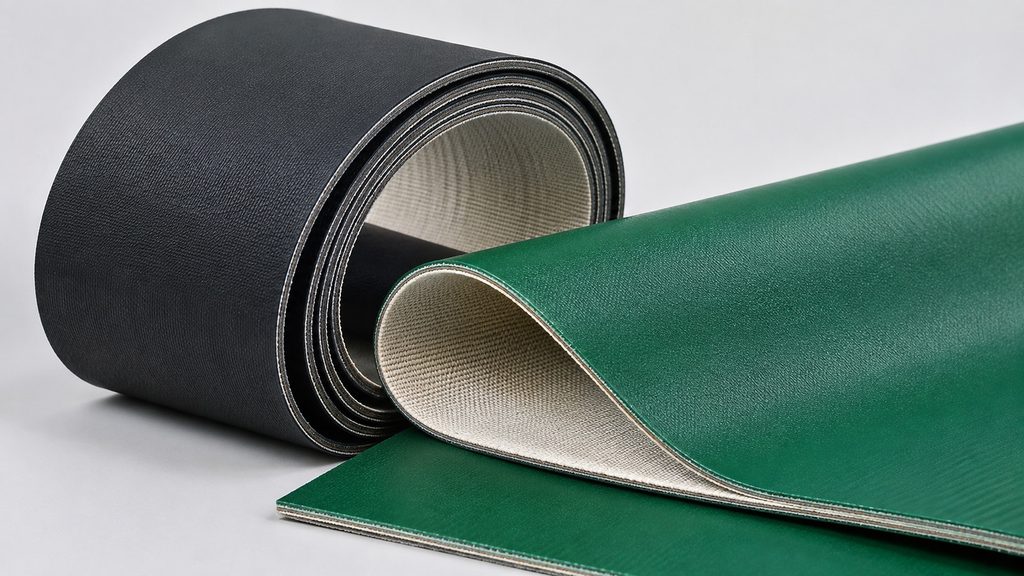
An abrasion-resistant conveyor belt uses a material and construction suited to the rubbing it will encounter in service. Selection starts with the surface losing material and the object rubbing against it. Compare evidence for the exact candidate construction, then check whether the belt can run on the existing supports, pulleys and joint arrangement.
What Is Conveyor Belt Abrasion?
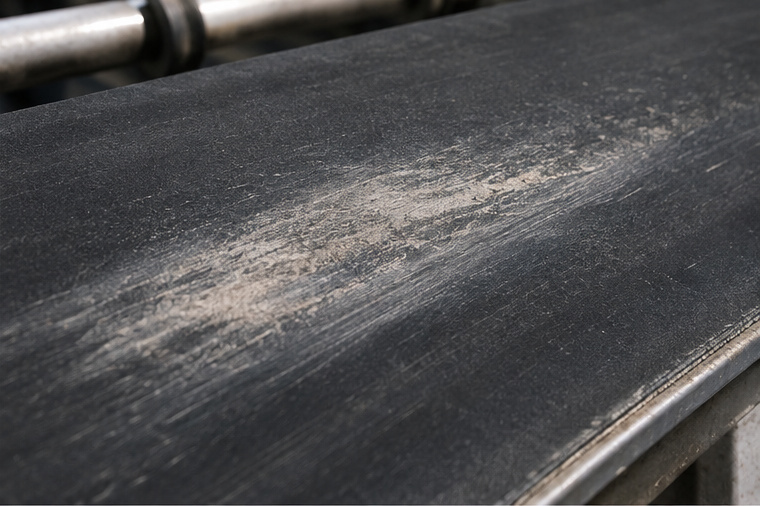
Abrasion is mechanical wear caused by rubbing or sliding contact. It may gradually thin a cover or wear down a raised pattern. A polished patch can reveal contact before you have enough measurements to establish material loss. Keep a record of the location, profile and thickness so later inspections can distinguish a cosmetic change from progressive wear.
Cuts, gouges and impact damage need separate descriptions. A cut is a narrow incision. A gouge removes or displaces material more locally. Impact describes the loading event and may damage the cover or reinforcement even when gradual rubbing is also present. A sharp fragment can gouge the belt at the loading point, then leave a long scratch if it becomes trapped against a stationary component.
Softening, swelling or cracking after cleaning raises a different question about exposure or flexing. Chemical degradation and mechanical abrasion can occur together. Record the change in material condition and the cleaning history rather than assigning the damage to one mechanism by appearance.
What Causes Conveyor Belt Surface Wear?
On the carrying side, look for relative motion. A carton may slide as it enters a faster belt or remain stationary while the belt moves underneath it in an accumulation zone. On an incline, sliding can be concentrated where products are first loaded. Compare the wear pattern with those positions and with the points where product changes direction or meets a stop.
At a scraper or brush, look for a wear band across the contact zone and material trapped against the cleaning element. Check the element’s condition and setup against the conveyor documentation. A harder cover may still be scored by trapped grit. At loading points, distinguish repeated fine abrasion from damage directly beneath the drop or against a chute edge.
The running side has a different contact path. Grit on a slider bed, a damaged wear strip or a roller that fails to turn freely can mark the underside while the carrying face looks sound. An edge rubbed by a fixed bracket and a joint worn at a transfer each point to a specific contact to investigate. Map the marks to the machine before selecting a cover.
If the belt is drifting against a fixed edge, use the conveyor belt tracking guide to assess the lateral-running problem separately from surface abrasion.
How Do PVC, PU, PVK, Rubber and Modular Belts Compare?
PVC-coated fabric. Specify the coating and the underside independently. LKBELT’s PB20-B-AO pairs a black matte carrying face with a fabric underside. For wear concentrated on a bed, identify the underside and its contact conditions before comparing matte finishes or requesting more top cover. PB20-B-AO black matte PVC belt
PU-coated fabric. Ask which coating and reinforcement the supplier is quoting. LKBELT lists R-2M0845-AG as a 4.5 mm double-fabric PU flat belt. That description gives the buyer a specific construction to compare with the approved original. Request the cover thickness separately if it matters to the wear allowance, and check the proposed joint and pulley arrangement for the complete belt. R-2M0845-AG double-fabric PU belt
PVK logistics belting. LKBELT’s logistics example shows a patterned carrying surface. For a parcel line, compare the existing belt and candidate at transfers, stops and the running-side supports. Request the actual construction, surface and joint for the quoted belt. The logistics application alone leaves the wear behavior in your accumulation zone unresolved. PVK logistics conveyor belt
Manufacturer descriptions can help identify a candidate by formulation and construction. Forbo, for example, discusses wear-related properties for particular PVC-coated Transtex models in its account of cold-duty conveying. Keep that information tied to the named models and application. Forbo’s Transtex product discussion
Rubber-covered belts. For bulk handling, ask which cover compound and grade are offered, what specification and edition define that grade, and which test result applies. Review cutting and gouging exposure, loading impact, reinforcement and the joint separately. Similar grade labels from different specifications need their own acceptance criteria.
Modular plastic belts. Examine the module surface, hinge, rod, sprocket and wear strip as a system. Specify the exact grade, whether acetal, PE, PP or another material, and ask where the supplier expects wear in the proposed arrangement. Replaceable modules may limit the scope of a local repair. Cost depends on parts, labor, downtime and the condition of the rest of the system. Where food contact matters, request documentation for the exact materials and intended conditions of use.
For a broader explanation of belt material and construction families, see LKBELT’s types of conveyor belts guide. For abrasion selection, the decisive question remains where the wear occurs and what contact causes it.
Why Does Belt Surface Texture Matter?
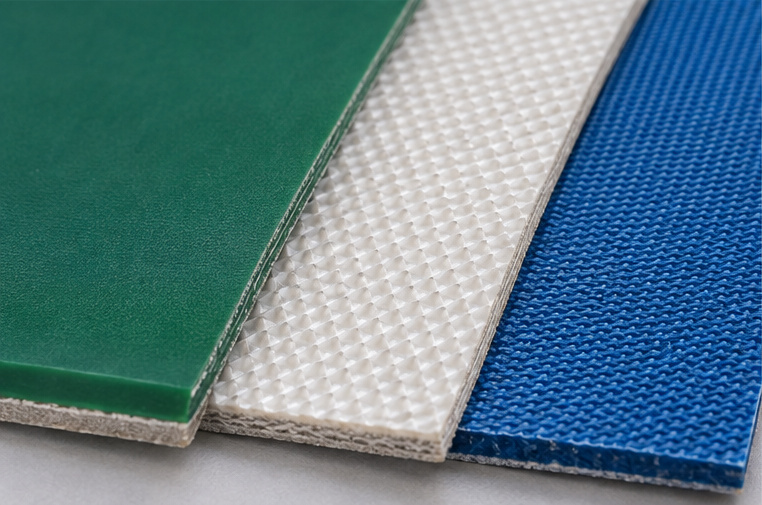
A smooth surface, a matte finish and a raised pattern change how product contacts the belt. Choose texture for the required grip, release and transfer behavior. A pattern can reduce sliding on an incline, yet sustained movement under a stopped product can put wear on its raised features. Evaluate what happens during both conveying and accumulation.
LKBELT’s sawtooth PVC example illustrates the geometry to specify. Record the pattern height, spacing and direction, then check clearance and interaction with the transfer and cleaning equipment. If grip is the reason for choosing it, compare product movement under representative conditions. Ask for separate wear evidence if abrasion performance is a purchase criterion. PVC sawtooth conveyor belt
How Is Abrasion Resistance Tested?
ISO 4649:2024 describes laboratory abrasion testing for rubber using a rotating cylindrical drum. Method A uses a non-rotating test piece and Method B uses a rotating test piece. Results may be reported as relative volume loss or an abrasion resistance index. Ask which method and result the supplier is quoting, and identify the exact material or cover sampled. ISO 4649:2024 abrasion test scope
For a purchasing comparison, request the test report or data sheet, standard edition, specimen identity, method, result and unit, and reporting source. Compare results on the same basis. A rubber volume-loss result and a plastics wear result obtained under a different method cannot be used to establish a common ranking.
A suitable laboratory result supports comparison or quality control. Installed life still depends on contact conditions, loading, debris and maintenance. ISO specifically limits the inference from this test to service performance.
Check the scope of the belt specification as well as the test method. ISO 14890:2026 addresses specified rubber- or plastics-covered textile belts for general use and excludes light conveyor belts described by ISO 21183-1. Use the latter to identify the light belting category. For a light PVC or PU processing belt, ask what evidence applies to that exact model and intended duty. ISO 14890:2026 belt specification scope · ISO 21183-1:2005 light conveyor belts
Abrasion-Resistant Conveyor Belt Selection Matrix
| Wear condition | Possible belt considerations | What the buyer should verify | Common selection mistake |
|---|---|---|---|
| Sliding cartons or repeated accumulation | Carrying-face texture and friction | Relative motion at entry and stops, carton condition, required release at transfer | Specifying maximum grip for every zone |
| Fine grit or abrasive particles | Cover compound and cleanability | Particle entry and retention, affected face, comparable wear evidence | Comparing unrelated test results |
| Repeated scraper or brush contact | Cover and joint compatibility with cleaning element | Wear band, element condition, documented setup and joint clearance | Ordering a harder cover before checking trapped debris |
| Running-side support abrasion | Underside construction matched to the support | Slider bed or roller condition, wear-strip material, contamination and contact marks | Adding top-cover thickness to address underside wear |
| Sharp gouges and loading impact | Cover, reinforcement and loading arrangement | Fragment shape, drop location, gouge pattern and evidence of internal damage | Treating cover abrasion data as a cut or impact rating |
| Edge wear from equipment contact | Finished width, edge clearance and guiding arrangement | First point of lateral movement, matching contact marks and machine geometry | Ordering a stronger cover while the belt still rubs |
| Repeated washing and cleaning | Material and joint compatibility with the actual process | Agents, exposure, temperature and evidence of swelling or loss of texture | Choosing from a polymer name alone |
How Should Buyers Assess a Worn Conveyor Belt?
- Map the wear. Mark the carrying face, underside, edge, attachment or joint on a sketch. Note whether the mark stays at one machine station or recurs with the same part of the belt.
- Record material changes. Photograph the worn and unworn areas. Document thickness locations and measurement basis, remaining pattern, exposed fabric, cuts and joint condition.
- Reconstruct the duty. Record loading, stops, transfers, cleaning, recent maintenance and sources of debris. Have qualified personnel examine the supports, pulleys and contact points under the applicable isolation and service procedure.
- Separate findings from the proposed correction. A matching scrape mark supports a contact investigation. A change in compound becomes a stronger candidate when the contact is understood and the existing construction is unsuitable for that duty.
Check the full route before changing thickness or reinforcement. Added thickness or a different carcass can change bending and clearance at small pulleys, reverse bends and transfer points. Confirm that the replacement’s joint suits the finished construction and installation.
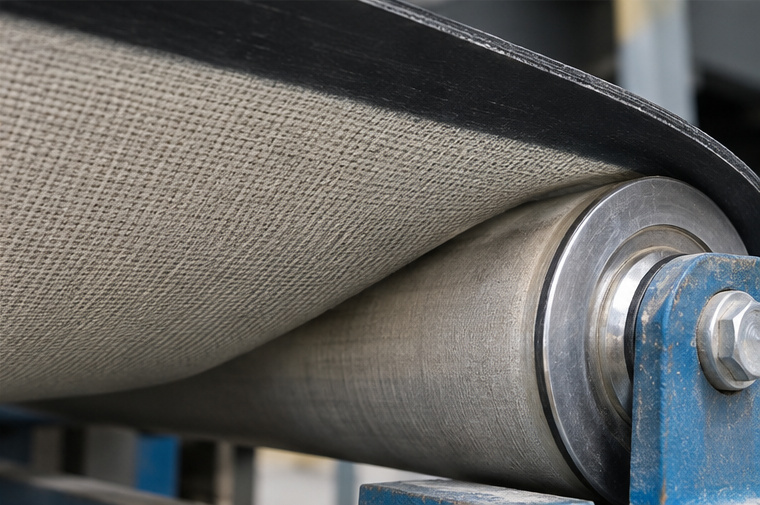
Where wear has exposed reinforcement or affected the joint, have the belt assessed against the equipment and supplier criteria. Conveyor belt damage and replacement assessment
Two Practical Industrial Selection Scenarios
Packaging Conveyor with a Polished Accumulation Zone
Suppose cartons stop against a gate while the belt continues to run. The carrying surface polishes in the queue and the underside remains comparatively uniform. Record how long cartons accumulate and whether the wear coincides with dusty packaging or a cleaning change.
Compare candidates for both sliding contact at the gate and reliable release at the transfer. A higher-grip finish might help at entry but increase drag under stationary cartons. If one surface cannot meet both requirements, review the accumulation arrangement with the equipment team.
Rough Particulate Material at a Loading Point
Suppose a bulk belt develops isolated deep gouges below a chute and gradual cover thinning farther downstream. Record the drop and fragment shape, then inspect for trapped sharp material and assess impact support.
Request cut and impact suitability separately from comparable abrasion data for the cover. Retain the machine’s bulk duty, carcass, pulley and joint requirements in the comparison. A light PVC or PU belt that fits the available width still needs independent verification against those loads and bending conditions before it can be considered.
What Information Should Buyers Request Before Ordering?
Give suppliers the same duty and wear record so their quotations can be compared:
- Original model or drawing revision, finished width and length reference, total thickness and quantity.
- Carrying surface, underside, reinforcement, cover thickness if known, and joint and attachment requirements.
- Product shape and size, sliding and accumulation cycle, loading and transfer geometry, speed and load.
- Pulley and idler arrangement, support materials, scraper or brush contact and available clearances.
- Wear location and photographs of the face, underside, edge and joint, with the observed contact or suspected cause identified separately.
- Cleaning agents and exposure conditions, temperature and contamination, and any documentation required for the application.
- Proposed construction and applicable wear evidence, with the exact specimen, method, edition, result and unit. Agree on trial criteria if comparable data are unavailable.
Frequently Asked Questions
Is PU Always More Abrasion-Resistant Than PVC?
Compare the exact formulations and construction under a relevant test or application trial. The answer depends on what rubs against the surface and under which conditions.
Does a Thicker Conveyor Belt Last Longer?
A thicker usable cover can offer more material to wear away. Total thickness also includes other layers, and life may be limited by underside wear, cuts, flexing or joint damage.
Is a Rough-Top Belt More Wear-Resistant?
A rough surface may change product sliding. Its raised features still experience contact, and wear resistance depends on the compound and duty.
Can an Abrasion Report Predict Service Life?
Use the report to compare applicable results. Estimate service performance from representative operating evidence or an agreed trial that records wear at the actual contact zone.
When Should a Worn Belt Be Replaced?
Have progressive thinning, exposed reinforcement or joint damage assessed against the machine and belt criteria. Address the source of damaging contact when specifying the replacement.
Conclusion
Choosing the right abrasion-resistant conveyor belt starts with understanding the actual cause of wear, not simply selecting a harder material or a thicker cover. The carrying surface, underside, reinforcement, and joint construction all need to match the conveyor’s operating conditions.
Before ordering a replacement, compare the available material evidence, check pulley and support compatibility, and confirm the finished belt specifications.
If you need help selecting a suitable belt, send LKBELT your belt specifications and operating requirements for a technical review and quotation.