
A maintenance team finds a worn synchronous belt with a 10 mm tooth pitch. Purchasing locates another 10 mm belt of the same width and tooth count. The replacement appears close, but the existing pulley was made for a different tooth shape. Matching the three numbers does not establish a compatible drive.
Identify a timing belt tooth profile from the original belt and the mating pulley—not pitch alone. Confirm the profile family, pitch, tooth count or specified pitch length, width, construction and any backing before ordering. T, AT, HTD and other tooth systems can have different groove geometry even when their nominal pitch matches. A proposed change of profile may require pulley replacement and an engineering review, not merely a new belt.
This guide focuses on industrial synchronous belt replacement and OEM purchasing. It explains how to separate a correct like-for-like replacement from a system redesign while keeping the evidence needed for a reliable quotation.
What Is a Timing Belt Tooth Profile?
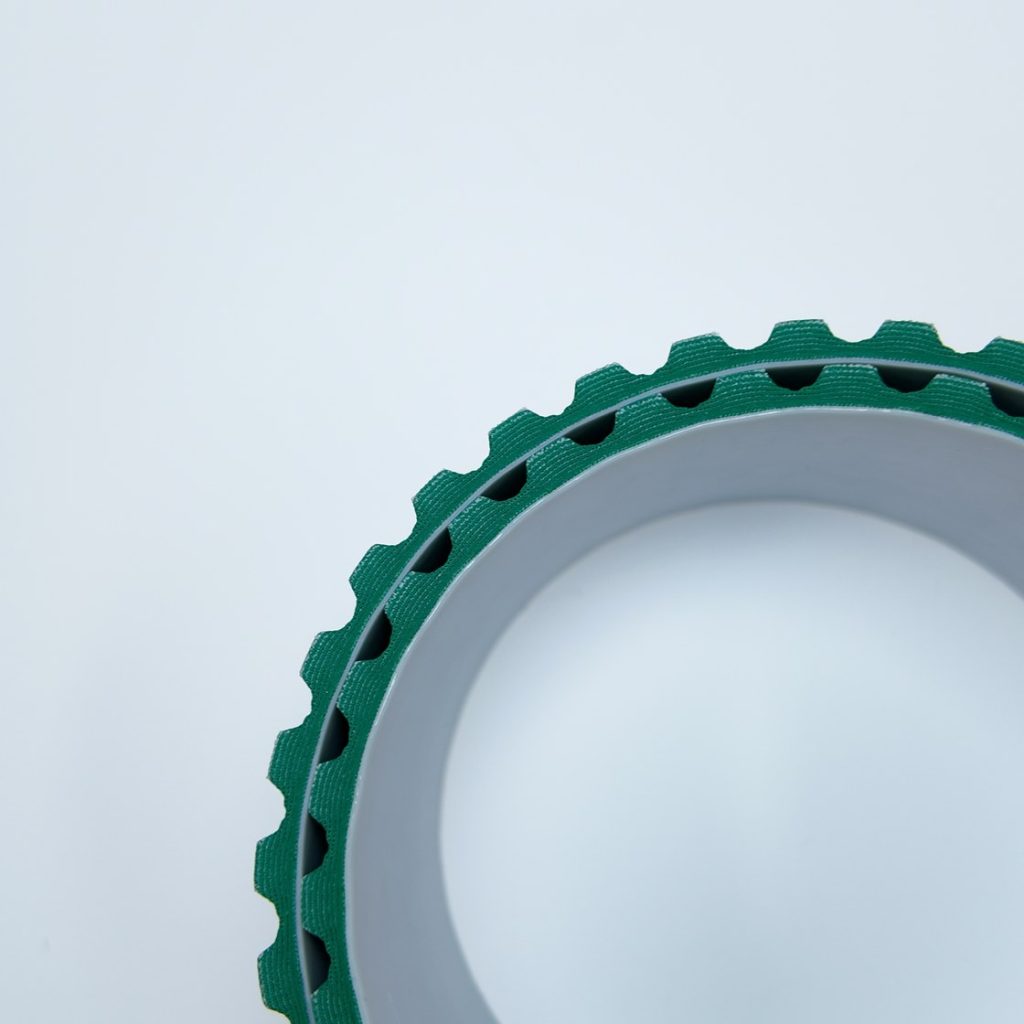
A timing belt transmits motion by engaging shaped belt teeth with matching pulley grooves. Pitch is the spacing of adjacent corresponding teeth along the defined pitch line; tooth profile describes the geometry that engages the pulley. Belt width, pitch length and the tooth system are different specification fields.
The pulley is not an interchangeable background component. Groove flank shape, depth and clearance influence how the teeth enter, share load and release. A belt may rest on a pulley without having the tooth engagement that the drive designer approved. The Pfeifer timing belt identification guide distinguishes multiple pitch and profile families and cautions against assuming interchangeability from similar appearance.
The industrial timing belt guide covers how synchronous drives operate generally. Here the purchasing question is narrower: which exact belt can work with the pulleys already installed, and what evidence supports that conclusion?
T and AT: Similar pitch does not mean identical teeth
Metric T profiles are commonly referred to by pitch designations such as T5 and T10. AT is a modified trapezoidal family with its own tooth geometry and corresponding pulley specification. For example, T10 and AT10 both indicate a nominal 10 mm pitch, yet they are not approved substitutes for each other’s pulley simply because their pitches coincide.
Optibelt’s published timing-pulley technical guidance explicitly distinguishes T and AT and specifies matching pulley profiles. Its discussion of drive behavior belongs to the described manufacturer systems, not a universal performance guarantee for every belt sold as AT or T.
LKBELT’s T10 PU timing belt profile page lists a T10 reference with 10 mm pitch, 2.5 mm tooth thickness and 4.5 mm belt thickness including teeth. Those are T10 profile-reference dimensions, not evidence that an arbitrary belt of this thickness fits an AT10 pulley or meets a particular power rating.
The separate SFAT10-PAZ PU timing belt page identifies a real LKBELT product designation and asks buyers for the pulley drawing or existing sample, plus width, finished length and surface requirements. Its general profile chart should not be treated as a model-specific certificate or proof that SFAT10-PAZ shares every characteristic of a standard T10 belt. Confirm the full design against the actual pulley.
HTD and other rounded-tooth systems
HTD describes a curvilinear tooth system, commonly designated with metric pitches such as 3M, 5M and 8M. Its tooth and pulley geometry are not the same as the trapezoidal T or AT profiles. A 5 mm HTD belt is therefore not automatically compatible with a T5 or AT5 pulley.
Other rounded-tooth families exist, including RPP and manufacturer-specific modified curvilinear systems. They should not be merged into a single generic “rounded tooth” category. Some manufacturers publish particular cross-compatibility arrangements, but those statements may be directional, product-specific or dependent on operating conditions. For example, Optibelt’s timing-pulley profile guidance describes RPP-profile belts as compatible with standard HTD pulleys in the systems it discusses. That manufacturer statement does not prove that an unspecified RPP5M belt from a different supplier is approved for every HTD5M drive. Do not convert a competitor’s interchangeability statement into blanket approval for LKBELT products.
The LKBELT RPP5M-PAZ PU timing belt provides a concrete RPP-family sourcing reference. Its product page explicitly requests the original marking or pulley drawing and the required finished belt dimensions. It does not by itself authorize substituting an HTD5M belt or using an RPP belt on every 5 mm drive.
Imperial profiles and mixed-unit mistakes
Industrial equipment may use inch-pitch profiles such as XL, L or H. These are not simply another way of labeling metric T or HTD teeth. An XL pitch is 0.200 inch, or 5.08 mm—not 5.00 mm. That difference may appear small on one tooth but accumulates over engagement and belt length.
When the original markings are worn, record the measurement units before interpreting a suspected profile. A rounded estimate from a ruler is not a substitute for the equipment drawing or a manufacturer-confirmed pitch and tooth form. Never force a belt onto the pulley to see whether it will run.
Timing Belt Profile Comparison for Replacement Buyers
The table below is a replacement-identification guide, not a universal drive-rating or interchangeability chart.
| Profile family | Common reference examples | What the tooth system tells you | Replacement decision |
|---|---|---|---|
| Metric T | T5, T10 | Trapezoidal-family geometry; pitch alone does not specify width or construction | Match the exact T pulley profile, finished length and belt build |
| Metric AT | AT5, AT10 | Modified trapezoidal geometry distinct from T at matching nominal pitch | Do not substitute for T without pulley and engineering approval |
| HTD | 3M, 5M, 8M | Curvilinear family with a defined matching groove geometry | Confirm actual HTD generation/profile and pulley specification |
| RPP and related systems | RPP5M, RPP8M | Separate rounded-tooth geometry and branded variants | Seek manufacturer-approved compatibility; do not assume HTD equivalence |
| Imperial trapezoidal | XL, L, H | Inch-based pitches and specific groove forms | Convert units correctly; match the inch-family pulley |
Two errors are especially common. First, buyers confuse a shared pitch number with a shared tooth shape. Second, they confuse a product series chart with a binding specification for the exact offered belt. Use catalog data to narrow the candidate, then check the manufacturer’s documentation and the actual mating pulley.
The Three Compatibility Gates: Profile, Construction and Duty
A replacement can pass one gate and still fail at the next:
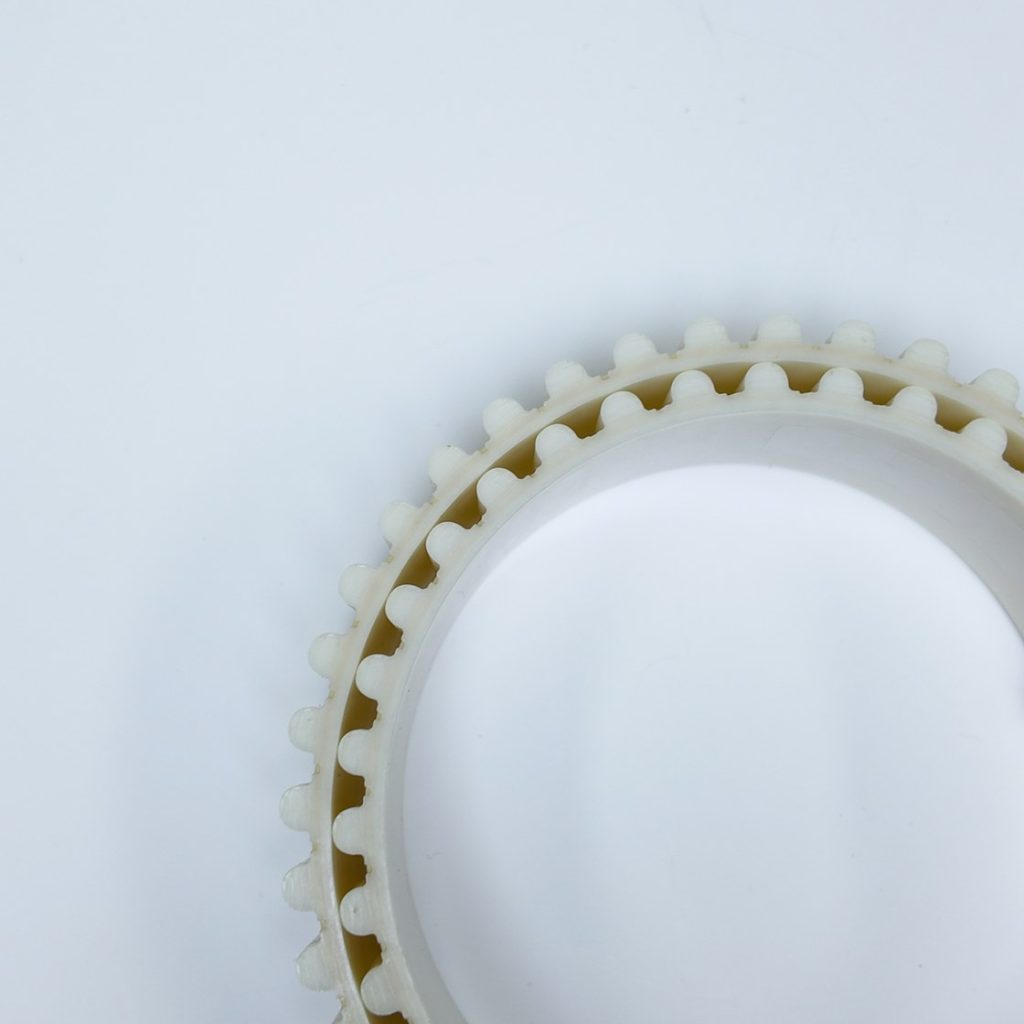
- Tooth engagement: exact profile family, nominal pitch, mating pulley drawing and pulley wear condition.
- Finished belt construction: correct tooth count or pitch-length convention, width, tensile member, coating, backing, joint format and any cleats or guides.
- Operating approval: rated duty, pulley and idler diameters, installation tension, reverse bends, environment and OEM-authorized deviations.
For purchasing, record each gate as verified from drawing, supplier-confirmed, or unresolved. If the first gate is unresolved, ordering a belt with the right length and material only increases the chance of a convincing-looking mismatch.
How to Identify an Existing Timing Belt Before Ordering
Begin with machine identity and evidence, not by ordering from a generic photo. Maintenance should isolate the machine and use the OEM’s safe access procedure before touching guards, pulleys or belts. Do not inspect tooth engagement by hand while a drive is powered or rotating.
1. Record belt markings and the machine reference
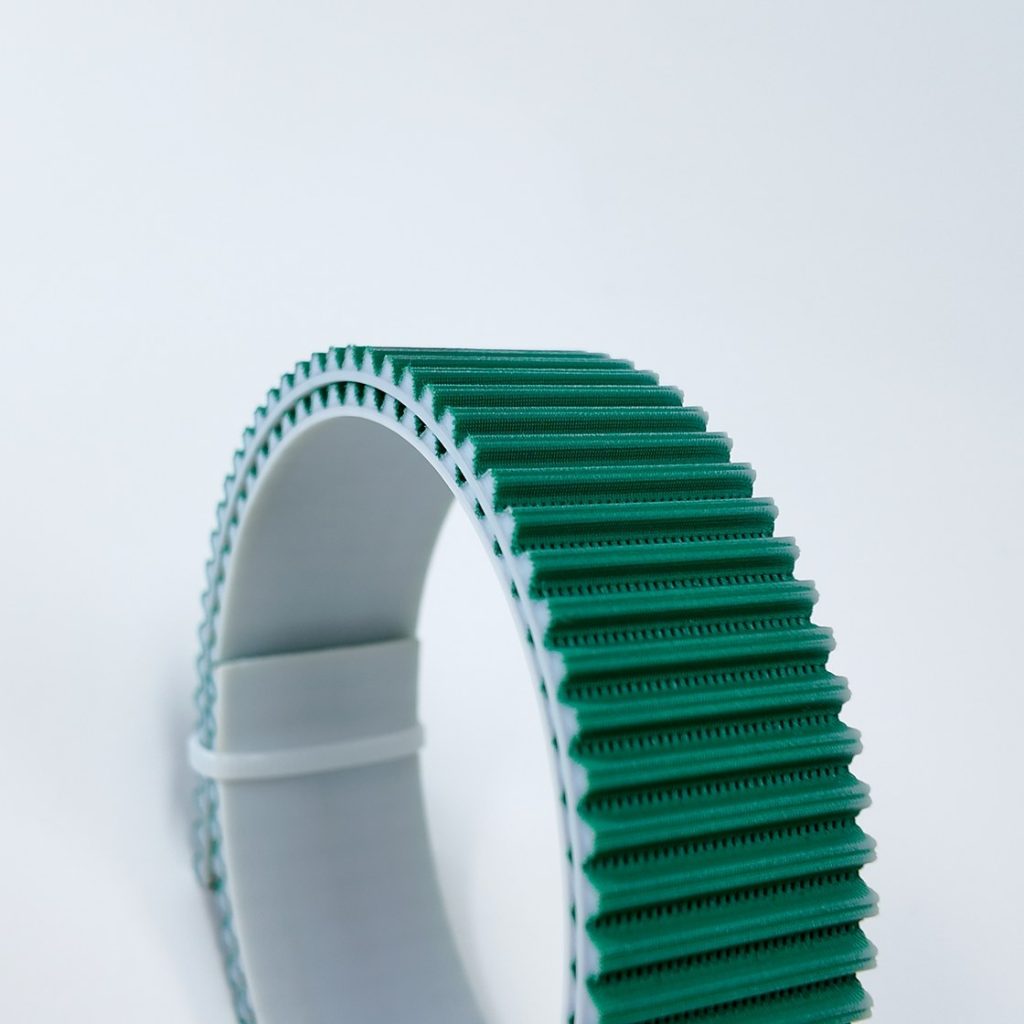
Photograph the entire marking before it fades during removal. Include manufacturer, profile designation, tooth count or length code, width code, material and any suffixes. Some manufacturers encode outside length, pitch length or tooth count differently. Record the part number literally rather than decoding an unfamiliar code by guesswork.
Include machine model, revision, shaft arrangement and original parts drawing when available. A previously installed substitute may not have the intended tooth form; compare it with the pulley reference rather than assuming the old belt was correct.
2. Inspect the mating pulleys and identify their profile
The pulley drawing or manufacturer’s marking is stronger evidence than a worn belt alone. Record pulley tooth count, profile designation, diameter or drawing, flange arrangement, tooth wear and any nonstandard modification. Photograph a clean section of the groove from a suitable angle.
If there are multiple toothed pulleys, verify each one. A drive with mismatched pulleys needs an engineering disposition before a new belt is selected. Do not use a belt as a gauge by pushing it into an unknown pulley groove.
3. Confirm pitch, tooth count and length reference
Where an intact belt is accessible, count teeth or obtain the count from the drawing. For a conventional endless synchronous belt, pitch length equals tooth count multiplied by pitch, provided both quantities and the manufacturer’s pitch-length convention are correctly identified. This describes a pitch-line dimension, not necessarily the measured outside circumference of the belt.
For a hypothetical verified 60-tooth, 10 mm-pitch endless belt, the nominal pitch length is 600 mm. That arithmetic illustrates identification only; it does not approve a profile, width, cord construction or operating duty. If the belt is open-ended, spliced or modified with attachments, establish the supplier’s ordering convention separately.
A worn, broken or stretched belt may be a poor original-length reference. Use the OEM specification, pulley geometry and take-up data to resolve discrepancies. Keep the measurement method and uncertainty with the inquiry.
4. Check the complete belt construction
Once the tooth profile is confirmed, identify belt width, body thickness, tensile member, tooth-facing material, outer backing, surface coating, cleats and any guide profile. A nylon tooth facing, for example, is a construction feature to document—not proof of compatibility with every pulley in the nominal profile family.
Check minimum permitted pulley and idler diameters, reverse bending, tension limits, operating speed, start-stop duty, exposure and side guidance. A custom backing or cleat can introduce a clearance problem even when the tooth side engages correctly. LKBELT’s custom timing belts with cleats and backings discusses the additional ordering details for processed belts.
Why a Correct-Looking Timing Belt Can Still Fail
Tooth profiles are only one part of replacement compatibility, but an incorrect profile can create engagement problems that adjustment will not repair. The following observations should be recorded rather than used to diagnose a cause without evidence:
- Unusual tooth wear or polishing: inspect both the belt teeth and pulley grooves; check for profile mismatch, wear, alignment, overload or contamination.
- Ratcheting or tooth jumping: evaluate the specified drive load, pulley engagement, installed tension and tooth system. Do not simply overtension the belt to hide a mismatch.
- Edge wear: check flanges, tracking, shaft alignment and available width or clearance.
- Repeated joint or cord damage: review bending, pulley size, duty and construction rather than presuming that a different tooth shape is the cure.
LKBELT’s industrial timing belt failure guide provides broader failure observations. A visible wear pattern can guide investigation, but a technician must establish the cause under the machine’s service requirements before repeat stock is approved.
Two Practical Industrial Replacement Scenarios
Scenario A — T10 marked belt, AT10 replacement offer
Suppose a packaging machine has an original specification for a T10 pulley set. The worn belt’s width and tooth count are recorded. A supplier proposes an AT10 belt with the same nominal 10 mm pitch and matching nominal length.
Purchasing should not approve that as a direct replacement. The buyer requests the existing pulley drawing and asks the supplier to identify the actual tooth geometry of both components. If the equipment must retain its T10 pulleys, the quotation should specify the verified compatible T10 construction. Any move to AT10 becomes a separate drive-modification proposal requiring pulley selection, mechanical review and approval.
The important result is not that one tooth family is categorically better. It is that preserving the approved drive is different from redesigning it.
Scenario B — A 5 mm rounded-tooth belt with an uncertain designation
Suppose a maintenance team removes a worn belt from a small indexing line. Its tooth pitch appears close to 5 mm, but the marking is unreadable. A supplier offers a belt described only as “5M compatible,” without naming the tooth system or mating pulley standard. The machine’s pulley documentation is incomplete.
Do not equate HTD5M, RPP5M and a manufacturer-specific 5 mm profile from that description alone. Ask for pulley photographs, part markings, groove drawings and a complete candidate-belt designation. The supplier should state whether any proposed compatibility is explicitly supported for the exact pulley and under which operating limits. If that evidence is unavailable, hold the order for identification or engineering approval rather than accepting a verbal claim.
In both cases, the extra inspection prevents an uncertain belt from becoming the purchasing standard for the next replacement cycle.
When Does a Different Tooth Profile Make Sense?
For a like-for-like maintenance purchase, retain the OEM-approved pulley and belt system unless evidence demonstrates a permitted alternative. The goal is to restore the original function with a documented replacement, not choose the newest profile family by reputation.
A genuine redesign may be justified if the equipment team has documented an unmet requirement involving load, positional behavior, available space, noise, service environment or replacement availability. That work considers the full drive: pulley profiles and tooth counts, pitch diameters, center distance, engagement, tension, shaft and bearing loading, duty cycle and machine safeguarding. A tooth-profile change cannot be evaluated by belt properties alone.
Material choice is also separate from tooth shape. Polyurethane and rubber synchronous belts can differ in reinforcement, coverings and supported operating environments, yet neither material automatically establishes the correct tooth geometry. See the PU vs rubber timing belt comparison for that distinct procurement decision.
Even within a selected family, manufacturer-specific variants and rated drive limits remain relevant. If a published supplier chart allows a defined interchange, document the exact approved direction, part numbers and operating constraints. Treat unqualified “fits 5M” descriptions as incomplete.
What to Include in a Timing Belt Tooth Profile RFQ
A useful quotation request lets suppliers verify the mating geometry before quoting a finished belt. Provide:
- Machine and original reference: OEM, model, equipment revision, original belt marking and any approved drawing.
- Tooth system: exact profile family and pitch, source of identification, belt tooth count or pitch length and mating pulley part number.
- Pulley evidence: tooth-profile drawing or photographs, pulley tooth count, width, flanges, idlers and any worn or modified components.
- Finished belt: width, ordering length convention, belt material, tensile member, tooth facing, back coating and any attached guides or cleats.
- Installed duty: transmitted function, speed, start-stop or reversing behavior, load and peak-duty information provided by engineering, environment and tensioning arrangement.
- Approval requirement: whether this is an exact replacement or a proposed alternative; acceptable deviations, sample process and responsible technical approver.
For an LKBELT inquiry, distinguish the specific product reference from a general profile table. If quoting T10, SFAT10-PAZ or RPP5M-PAZ, supply the corresponding pulley documentation and full finished specifications. Do not assume that one product page establishes a complete replacement approval for the customer’s particular machine.
Before repeat procurement, have qualified personnel check the received marking, tooth form, width and construction against the accepted specification. Installation and controlled testing should follow the OEM and site procedures. Record engagement, tracking, any unusual noise or wear, and the approved belt/pulley combination. Retain that revision in the maintenance and purchasing system.
Frequently Asked Questions
Are T10 and AT10 timing belts interchangeable?
Not as an automatic direct replacement. They share a nominal 10 mm pitch but use different tooth geometry. Confirm the pulley profile and obtain specific engineering approval for any change.
Can an HTD5M belt replace a T5 belt?
Do not assume so. Both use a nominal 5 mm pitch, but the tooth families and matching pulley grooves differ. Use the approved belt profile for the installed pulleys.
Does every RPP5M belt fit an HTD5M pulley?
No universal claim should be made. Some manufacturers publish limited or product-specific compatibility guidance. Obtain confirmation for the exact belt, pulley and duty rather than assuming interchangeability from pitch.
Is timing belt length the same as outside circumference?
Not necessarily. Synchronous belts are commonly specified by pitch-line length or tooth count. Record the manufacturer’s ordering convention, especially when measuring a worn belt.
Can a different belt material fix a tooth-profile mismatch?
No. Material and tooth engagement are separate requirements. Match the pulley geometry first, then evaluate the specified body, cord and coatings.
Conclusion
A timing belt tooth profile must be matched to the mating pulley before the buyer approves width, length or material. T, AT, HTD, RPP and imperial designations identify different tooth systems, and visual similarity is not evidence of interchangeability.
For a replacement inquiry, send the original belt marking, pulley drawing or photos, tooth count, finished dimensions, construction and operating requirements. That gives LKBELT the information needed to review a suitable timing belt specification without treating a system redesign as a routine belt swap.