
Conveyor Belt Speed Calculation: Pulley RPM, Actual Speed and Belt Selection
A production team may know a conveyor motor’s nameplate speed yet have no reliable record of the belt speed at the product surface. That gap matters when replacing a belt: a new cover may change product handling, but it cannot correct an incorrect drive ratio or a slipping pulley.
Conveyor belt speed can be estimated from the effective drive-pulley diameter and its actual rotational speed: for a friction-driven belt with negligible slip, belt speed in metres per second is π × diameter in metres × pulley revolutions per minute ÷ 60. The result is a kinematic estimate, not proof that the belt, joint, bearings or conveyed product are suitable for the duty. Confirm it against a safe measured speed and the equipment manufacturer’s limits.
What Determines Conveyor Belt Speed?
In a conventional friction-driven conveyor, the drive pulley pulls the carrying belt through its contact with the belt surface. The pulley diameter and actual pulley RPM determine the ideal surface velocity. The installed drive ratio, variable-frequency drive settings and operating load determine how fast that pulley turns. Belt slip, wear, changes in pulley surface and measurement error can make the observed belt speed different from the calculation.
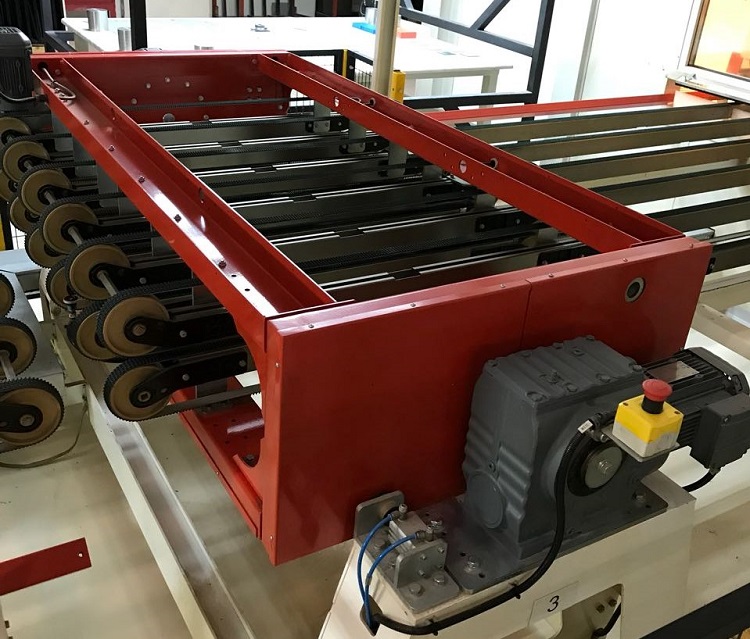
This distinction is easy to miss when a purchase request lists only “motor 1,500 RPM.” A gearbox, chain or secondary belt drive may reduce the pulley speed considerably. The motor shaft is not necessarily the shaft carrying the conveying-belt pulley. LKBELT’s guide to conveyor belt drive types explains why the drive arrangement and actual belt route should be identified separately.
Nor should the speed of a carrying belt be confused with the pitch-line velocity of a toothed timing belt or a chain. These use different engagement geometries. A drive sprocket’s outside diameter may not be the pitch diameter used in a positive-drive calculation. Record the actual drive system before choosing a formula.
Conveyor Belt Speed Formula and Units
For a pulley whose effective contact diameter is known, use the following ideal relationship:
v = π × D × n / 60
Where:
- v = ideal belt speed in metres per second (m/s)
- D = effective pulley diameter in metres (m)
- n = drive-pulley speed in revolutions per minute (rpm)
If diameter is measured in millimetres, divide it by 1,000 before applying the formula. To obtain metres per minute, use v(m/min) = π × D(m) × n(rpm). One metre per second equals 60 metres per minute.
Quick reference: calculate or reverse-check the drive-pulley speed
| Known inputs | Relationship | Output |
|---|---|---|
| Diameter D (m), pulley speed n (rpm) | v = πDn / 60 |
Ideal belt speed (m/s) |
| Diameter D (m), required ideal speed v (m/s) | n = 60v / (πD) |
Ideal pulley rpm |
| Motor speed nₘ (rpm), single reduction i:1 | n = nₘ / i |
Nominal output rpm, if directly coupled |
| Belt speed v (m/s) | 60v |
Belt speed (m/min) |
The reverse calculation does not determine motor or gearbox suitability. Verify any intermediate drive stages, traction and allowable machine speed before using the resulting pulley rpm as a target.
The underlying relationship appears in the industrial Shipp Belting belt-speed calculation resource, which requests pulley or sprocket diameter and drive-speed information. Its online tool includes additional gear and chain inputs. Our example below deliberately isolates the conveying-belt drive pulley rather than treating all of those inputs as interchangeable.
Worked example: an ideal speed, not a validated machine rating
Assume, solely for calculation, an effective drive-pulley diameter of 100 mm (0.100 m) and an observed pulley speed of 120 rpm.
v = π × 0.100 × 120 ÷ 60 ≈ 0.628 m/s, or 37.7 m/min.
If a hypothetical, safeguarded surface-speed reading under defined load is 36.0 m/min, the difference from 37.7 m/min is about 4.5% of the ideal estimate. This difference is not automatically a belt-slip percentage: pulley-diameter assumptions, controller feedback, instrument accuracy and load conditions may explain part of it.
Those numbers are hypothetical. They do not describe a particular LKBELT model or recommended operating speed. If an actual belt measurement differs materially, check the effective diameter reference, pulley RPM, ratio assumptions, instrument method and potential slip before changing the belt construction.
The word effective matters. A pulley with a bonded covering or lagging may not have the same outside diameter as its bare metal shell. Contact geometry, compression and the manufacturer’s measurement convention may change the relevant diameter. Use the equipment drawing or approved measurement method rather than guessing from a catalogue picture.
From Motor RPM to Drive-Pulley RPM
A reducer’s stated ratio needs a clear convention. For a speed-reducing stage with an input-to-output ratio of i, the simple ideal relationship is pulley RPM = motor RPM ÷ i—provided the motor directly drives that reducer and there are no further stages.
For example, a hypothetical motor turning at 1,440 rpm through a 12:1 reduction yields approximately 120 rpm at the reducer output before considering any secondary belt, chain or gear stage. If the output shaft is not the conveyor’s drive pulley, another ratio must be applied. Do not multiply nominal ratios without checking each stage’s input and output definition.
A variable-frequency-drive display may show command frequency, estimated motor RPM or actual feedback speed, depending on its settings. It is not automatically a reading of belt surface speed. When a conveyor has more than one drive, confirm the intended speed reference and synchronization method with the equipment engineer.
The distinction becomes especially important with small-package conveyors. A 10% error in assumed belt speed may change spacing and transfer timing; however, the resulting product-handling effect cannot be predicted from speed alone. Package geometry, accumulation, adjacent conveyor speed and contact conditions also matter.
How to Measure Actual Belt Speed Safely
Use the manufacturer’s and site’s approved measurement procedure. Keep hands, loose clothing, rulers and handheld objects clear of moving components. Equipment isolation is necessary for physical access or maintenance; a powered measurement must be carried out by qualified personnel under approved safeguards.
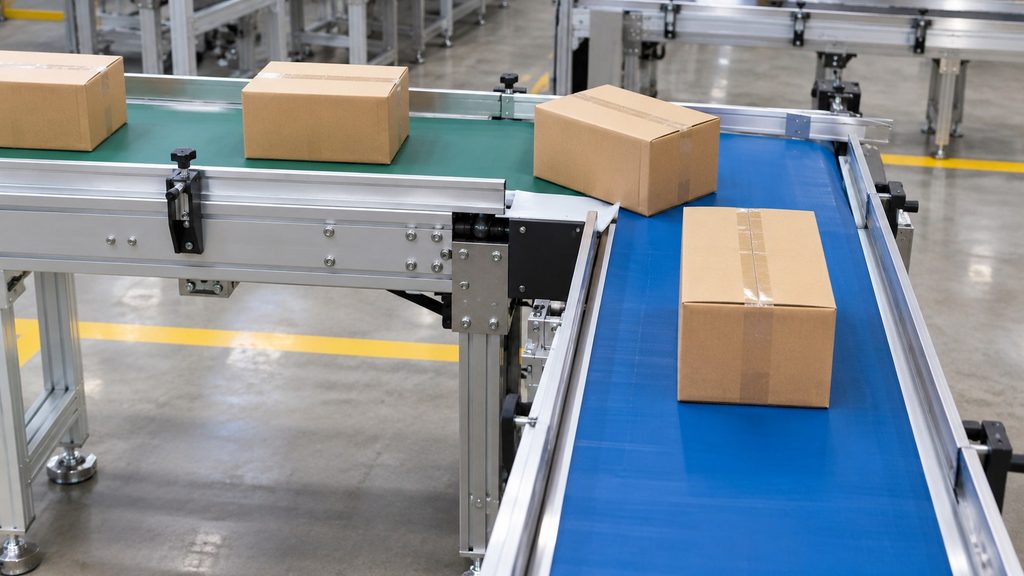
Depending on the equipment, actual speed may be taken from a calibrated encoder on an appropriate shaft, an approved non-contact tachometer method, or existing machine control data. A pulley tachometer still gives pulley RPM, not an independent measurement of belt-surface travel if slip is possible. A surface-travel measurement or an appropriately validated encoder relationship is needed to assess that difference.
Document the conditions under which the result was observed: no-load or loaded operation, speed set point, running direction, machine temperature, load condition and any noticeable slipping or hunting. If the drive pulley maintains its expected RPM but the belt surface lags under load, investigate belt-to-pulley traction, support resistance, tension and contamination. Do not simply increase tension; excessive tension can damage bearings, joints and belt reinforcement.
For those checks, the existing LKBELT article on conveyor belt tensioning supplies background, while the specific machine’s tension procedure and belt supplier’s limits remain controlling.
Calculation Inputs That Buyers Must Not Mix Up
| Input | What it actually represents | Common purchasing error | Evidence needed |
|---|---|---|---|
| Motor nameplate RPM | Motor’s nominal rated rotational speed | Treating it as drive-pulley RPM | Gearbox, secondary-drive ratio and operating setting |
| Drive-pulley RPM | Rotational speed of the driven roller | Using an idler-roller reading instead | Identified pulley and verified measurement |
| Effective pulley diameter | Diameter used at the conveying-belt contact | Using bare-shell dimensions after lagging | Drawing and measurement convention |
| Calculated belt speed | Ideal surface velocity under the model | Treating a calculated value as observed travel | Real operating measurement where required |
| Operating belt speed | Speed under a defined load and setting | Ignoring slip, hunting or direction changes | Site measurement and test record |
| Approved belt speed limit | Permitted operating range for a specific finished belt | Assuming any PVC or PU belt is suitable | Product-grade, joint and equipment approval |
The last row is a selection gate, not a mathematical output. A speed formula cannot establish the permissible centrifugal effects, reinforcement fatigue, joint life or product grip of a replacement belt.
Why Speed Matters to the Finished Conveyor Belt
Product grip, release and transfer
When cartons accelerate, stop or transfer to another conveyor, the carrying surface must provide the needed traction or release. A glossy cover and a textured cover may produce different handling results even at identical nominal speed, but photographs alone do not establish friction values. The LKBELT blue PVC flat conveyor belt provides a documented glossy blue face and fabric underside as a construction example—not a validated speed or grip rating.

At a transfer, check the adjacent conveyor’s real speed, pulley size, product footprint, gap and support arrangement. A calculated speed match does not guarantee a stable transfer if the receiving belt is moving differently under load. The conveyor transfer-point guide covers the related clearance and interface decisions.
Underside, support bed and heat
A belt can run over a slider bed, on carrying rollers, or through both. Higher speed may increase the frequency of bending and joint passage, while frictional heating depends on the load, contact surfaces and operating conditions. Do not infer a permitted speed from coating type alone. The belt’s underside must be matched to the bed and actual driven pulley contact.
The LKBELT transparent PU conveyor-belt range shows separate grade-specific constructions, including published minimum-pulley references. These table entries are not speed ratings and should not be transferred to the pictured roll or another model. A proposed belt still needs confirmation of its finished joint and real operating duty.
Belt joint, bend cycles and tension
At higher running speeds, a finished joint passes the drive and other rollers more often per hour. That makes joint construction and local bending conditions relevant to approval. The number of passes alone does not predict service life. Confirm total thickness, joint style, smallest contacted pulley, reverse bends and any cleats or guides. Review conveyor belt splice types for the general options without assuming every splice suits every speed.
Operating tension is another separate limit. The drive must produce sufficient traction under peak demand, and the belt reinforcement and bearings must tolerate the resulting force. A speed result without load, belt width, pulley contact and drive duty is not an engineering approval.
Two Practical Speed-Verification Scenarios
Scenario 1: a packaging conveyor appears slow after belt replacement
Suppose a carton line runs below its expected transfer rate after a replacement belt is fitted. The maintenance team first compares the intended set point with verified drive-pulley RPM and the approved diameter reference. If calculated speed is already lower than the intended process speed, the issue may lie upstream in the motor, reducer or settings. If the pulley speed is correct but belt travel differs under load, inspect traction, contamination and the support arrangement.
Only after this separation should procurement compare the old and proposed belt underside, joint, reinforcement and finished length. The belt purchase request should not assert that changing from PVC to PU will “fix speed.” A belt material change may be justified, but it needs its own evidence and acceptance test.
Scenario 2: a small-product line needs a different operating speed
An OEM plans to run a compact conveyor faster to match a new upstream station. The required speed is not a standalone belt specification. Engineering should review the actual pulley RPM range, gear reduction, small end roller, joint passages, bed resistance, guides and product transfer. The proposed replacement must then be checked against the complete duty, including startup, stops, reversing, cleanliness and wear mechanisms.
The right outcome might be approval of the existing construction, a changed finished belt, or an equipment-side redesign. A speed calculation cannot decide which without product and machine evidence.
Conveyor Belt Speed RFQ and Approval Record
Ask maintenance or engineering to provide the conveyor make and location, original belt reference, effective drive diameter, actual pulley RPM or speed range, gear ratios and control configuration, and the desired versus measured operating speed. Include the conveyed product, load, run duration, start-stop pattern, wet or oily exposure, bed or roller support, pulley route, take-up and drive surface condition.
For the belt itself, specify the carrying face, underside, reinforcement, width, finished endless circumference, total thickness, joint, any profiles and permitted substitutions. Photographs of both faces and the existing joint are useful for identifying the finished assembly. A qualified supplier can then review the proposed grade against the machine’s specified duty rather than simply quoting the same colour and width.
Agree a first-belt check that separates dimensional inspection, safe installation, drive operation and product handling. Record the approved machine settings and representative load condition; observe actual surface speed and transfer behavior under the OEM procedure. Keep the accepted construction and drawing revision for repeat orders.
Frequently Asked Questions
What is the conveyor belt speed formula?
For ideal friction-driven travel without slip, use v = πDn/60 when pulley diameter D is in metres and its rotational speed n is in rpm. Verify diameter and drive speed before treating the result as a machine estimate.
Can I use motor RPM instead of conveyor pulley RPM?
Not unless the motor directly drives that pulley at a known 1:1 ratio. Gearboxes, secondary transmissions and speed controls change the relationship.
Why does actual belt speed differ from calculated speed?
Possible reasons include a diameter or ratio error, control speed changes, slip, load-sensitive operation or an unsuitable measurement reference. Establish the cause instead of assuming the new belt is defective.
Does a faster conveyor need a different belt?
Not necessarily. Verify the selected belt’s permitted speed, joint, smallest pulley, working tension, heat and product-handling conditions for the proposed duty.
Does changing from PVC to PU increase conveyor speed?
Not by itself. The drive sets the ideal speed. A different belt construction may affect traction or handling, but it needs system-specific evidence.
Request a Speed-Related Replacement-Belt Review
If speed is known but finished belt suitability remains uncertain, send the original reference or drawing, drive diameter convention, actual measured speed and method, width, loop length, underside, joint and representative load. Contact LKBELT with these details for a belt-construction inquiry; the equipment engineer remains responsible for motor, gearbox and machine-speed approval.
Conclusion
Use the drive-pulley diameter and actual pulley RPM to calculate an initial conveyor belt speed, then verify actual travel under approved conditions. Treat speed, belt strength, contact friction and joint durability as separate requirements. For a replacement inquiry, send LKBELT the drive layout, measured speed, original belt sample and complete finished-belt specifications so any proposed construction can be reviewed against the machine rather than the formula alone.