
An OEM engineer considers replacing a noisy roller-chain drive with a timing belt. Both systems connect rotating shafts, but matching the old chain’s length or sprocket spacing will not produce a safe belt replacement. The existing drive may need new pulleys, revised tensioning, different clearances and a fresh capacity check.
For a timing belt vs chain drive decision, compare peak and continuous torque, speed, shock loads, shaft arrangement, maintenance needs and the complete drive geometry before choosing a system. A synchronous belt transfers motion through matching belt teeth and pulleys without the routine lubrication used by many roller-chain systems. Chain drives may remain the better fit for certain compact, high-load or harsh-duty arrangements. A chain-to-belt conversion is an engineered redesign, not a one-part substitution.
How Do Timing Belt and Chain Drives Work?
A timing belt, also called a synchronous belt, has molded or formed teeth that engage matching pulley grooves. Its tensile members carry the working load while the toothed interface transmits motion between shafts. The tooth profile, pitch and belt construction must match the corresponding pulleys. Unlike a friction-driven V-belt, a correctly specified synchronous drive does not rely on deliberate belt-to-pulley slip to establish its speed ratio. Tooth jumping can still occur if the drive is overloaded, improperly tensioned or incorrectly designed.
A roller chain uses articulated metal links engaging sprocket teeth. Its pitch, roller and link geometry must match the sprocket. A conventional roller chain also needs a lubrication and wear-management approach suited to its speed, load and environment. Specialty chain constructions may have different maintenance requirements, so the correct comparison is always between identified drive systems.
For general belt identification, see LKBELT’s industrial timing belt guide. This article addresses the drive-system decision: whether a machine should retain its chain arrangement, use a synchronous belt in a new design, or undergo a technically approved conversion.
Timing Belt vs Chain Drive: Main Differences
The following comparison provides a screening framework, not a blanket performance ranking.
| Decision factor | Timing belt drive | Roller chain drive | What the engineer must confirm |
|---|---|---|---|
| Power transfer | Positive engagement of matching belt teeth and pulleys | Positive engagement of chain links and sprockets | Peak torque, speed, duty cycle and required service factor |
| Lubrication | Dry synchronous drives generally do not need belt lubrication | Conventional roller-chain drives usually need planned lubrication | Exposure, lubricant policy and actual component instructions |
| Maintenance | Inspect belt, pulleys, tension and tooth condition | Inspect chain, sprockets, lubrication and wear/elongation | Accessibility, inspection intervals and stop-time costs |
| Load and shock | Capacity depends on belt family, width, cords and teeth in mesh | Capacity depends on chain size, strands, sprockets and duty | Starts, reversals, jams and transient peak loads |
| Packaging | Belt width, pulley diameter and center distance constrain layout | Chain pitch, sprocket sizes and chain path constrain layout | Available shaft spacing, axial space and guarding |
| Noise and cleanliness | Often attractive when oil-free operation is valued | Noise and lubrication practices depend on system design | Actual acceptance criteria, not generic material claims |
| Replacement flexibility | Available pitches, profiles and finished lengths must match approved drive | Chain length can often be adjusted in whole pitches, subject to design limits | Replacement availability and whether drive components must change |
Gates Unitta’s timing-belt and chain comparison identifies routine chain lubrication, belt-weight advantages and belt-length limitations as important tradeoffs. It also notes that low-speed, high-torque duties can require a wider specialized belt construction. Those observations help screen an application; they do not qualify an unspecified LKBELT belt for a chain replacement.
A Practical Go/No-Go Decision Before a Chain-to-Belt Retrofit
Use the comparison table to decide what kind of job you actually have:
- Keep and maintain the chain when the original drive remains within specification, wear or lubrication is the correctable problem, or a proposed synchronous system lacks a verified rating or usable installation space.
- Specify a timing belt for a new OEM design when torque and speed calculations, pulley geometry, alignment and the desired service regime can be designed together from the beginning.
- Evaluate a conversion as a separate engineering change when the existing system has documented maintenance, contamination or operating problems that justify redesigning the pulleys, belt, tensioning and guarding.
Compare whole-life consequences as well as the quote price: service access, replacement inventory, pulley or sprocket changes, downtime and the cost of validating the new configuration. A dry belt may remove chain-oiling tasks, but it does not eliminate inspection or guarantee a lower total cost.
Where Timing Belts Can Be a Better Fit
Dry operation and reduced lubricant handling
A synchronous belt can be attractive where lubricant handling, oil contamination or recurring chain-service access creates a practical burden. The belt itself is normally operated dry, provided the selected belt, pulley and environment are compatible. This does not establish food-contact suitability, cleanroom approval or any special compliance property. Those claims require documentation for the specific materials and installation.
Before converting an existing drive, document why the chain currently needs attention. A dirty chain guard, frequent lubrication, accelerated sprocket wear and unscheduled stops represent different problems. A belt drive may remove the chain’s oiling task while introducing separate requirements for pulley alignment, belt tension, guarding and spare-part availability.
Synchronized shafts and repeatable motion
Timing belts and roller chains both provide positive mechanical engagement. An appropriate timing-belt system may suit equipment that needs repeatable shaft coordination or controlled motion; claimed backlash or positioning performance must be verified for that particular design. But the term “synchronous” does not guarantee zero backlash or perfect positioning accuracy. Pulley geometry, tooth fit, cord stiffness, drive rigidity, load reversals and controls all matter.
For a positioning machine, give the supplier the required motion accuracy and reversal duty instead of relying on the belt name. The LKBELT T10 PU timing belt profile lists a 10 mm pitch, 2.5 mm tooth thickness and 4.5 mm overall profile thickness including teeth. These are reference dimensions for its T10 chart row, not an approval to use that product on an existing chain sprocket, or a verified load rating for an offered endless belt.
High-speed or maintenance-sensitive machinery
Noise and speed performance depend on the actual belt or chain, pulleys or sprockets, tension, load and alignment. Neither system is automatically silent. Record normal speed, accelerations, reversals, hours per day and the acceptable maintenance interval rather than relying on a generic speed or noise ranking.
When a Chain Drive May Be the More Practical Choice
A chain arrangement may remain appropriate when the original equipment has limited axial room, very high intermittent loads, specialized attachments or environmental demands that a proposed belt assembly has not been qualified to handle. Certain chain layouts also permit replacement-length adjustment by whole links, whereas many endless synchronous-belt sizes must be selected from an available range or engineered for the order.
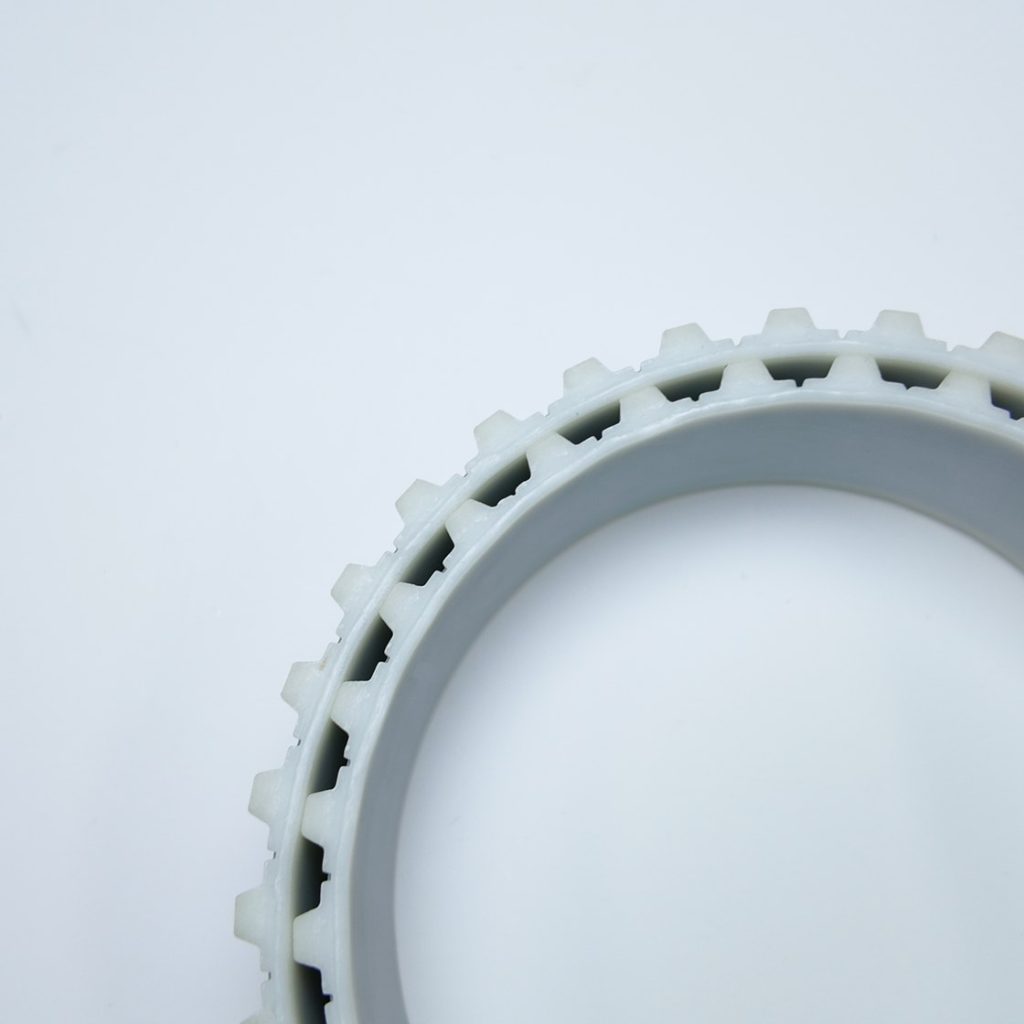
This is not a claim that belts cannot handle high torque. Specialized synchronous-belt systems are designed for demanding drives, but their load capacity is family- and application-specific. Gates, for example, offers qualified chain-to-belt conversion solutions using its own matched components; that product capability should not be transferred to LKBELT’s ordinary PU timing-belt listings. The Gates chain-to-belt conversion tool demonstrates why an engineered belt and pulley combination must be evaluated against the existing drive rather than selected by appearance.
Why Chain-to-Belt Conversion Is Not a Direct Swap
Chain sprockets do not become timing-belt pulleys
A chain sprocket has geometry designed for chain pitch and roller engagement. A timing belt needs pulleys made for its own tooth pitch and shape. Do not install a toothed belt on the old chain sprockets, even where the nominal pitch number appears similar. Confirm pulley groove geometry, tooth count, width, flanges, shaft mounting and alignment using the selected belt manufacturer’s engineering information.
This is particularly important when evaluating T, AT, HTD or other tooth-profile families. Belts with the same nominal pitch need not share interchangeable tooth geometry. LKBELT’s TK10 (13×8) PU timing belt explicitly asks buyers to provide a pulley drawing or sample, width and finished length. Its designation is not permission to infer a standard profile or an interchangeable chain-drive component.
Torque capacity involves more than belt width
A conversion calculation needs the operating torque and speed at each shaft, the starting and stopping transients, likely jams, working hours and the load distribution. On the belt side, the proposed family, tensile members, usable teeth in mesh, allowable pulley geometry and manufacturer-rated capacity are relevant. Increasing the width of an arbitrary timing belt cannot substitute for a complete power-rating check.
Document whether the motor and gearbox will remain unchanged and whether bearings and shafts can accept the new drive’s forces. Pulley diameters and belt pretension can change shaft loads. Guards, tensioning travel and maintenance access can also change after a conversion. The equipment engineer should approve the full layout before a belt is ordered.
Length, center distance and installation space must agree
The chain’s pitch length or link count does not equal a proposed timing belt’s finished pitch length. Record the existing shaft centers, available adjustment and permitted pulley diameters. Then determine whether the selected timing-belt family offers a compatible finished length, engagement and installation method. Check obstructions, cover clearances and whether an endless loop can be fitted without disassembling the machine.
LKBELT’s custom timing belt guide explains additional processing such as backings and cleats. Those features may serve conveying or handling duties, but their presence does not qualify a modified timing belt for a high-power chain conversion. Confirm the actual belt construction and manufacturer-approved joining format before selecting any modification.
Two Industrial Selection Scenarios
Scenario 1 — Packaging-line auxiliary drive
Suppose an automated packaging machine uses a roller chain to coordinate two shafts. The chain drive operates in a guarded enclosure, but maintenance records repeated lubrication access and an occasional contaminated work area. Engineering wants to evaluate a dry synchronous-belt arrangement.
First, the team records the machine’s actual torque, speed, motor starts, shaft centers, reversals and available width. It checks the required angular relationship and acceptable positioning error. A belt supplier can then identify candidate belt profiles and the matching replacement pulleys, with the equipment engineer reviewing power rating, shaft loads, tension adjustment and installation access.
If the proposed belt system meets the requirements and passes the OEM’s acceptance process, it may reduce the recurring oiling task. If the required pulley size, belt width or tooth engagement cannot fit, the chain may remain preferable. This is a hypothetical engineering example, not a documented LKBELT installation or performance claim.
Scenario 2 — Slow, shock-loaded processing machine
Suppose a processing machine drives an intermittently loaded shaft through a chain and sprockets. Procurement asks whether a standard PU timing belt could replace the chain because the belt requires no chain lubricant.
The operating record reveals repeated starts and occasional high load peaks. The purchasing team should not nominate an LKBELT T10 belt based only on its pitch chart. The engineer must check peak torque, available width, belt family rating, pulley dimensions, teeth in mesh and potential overload events. The project may require a specialized approved synchronous system—or may retain the chain.
A sample belt can support dimensional review, but it cannot prove the proposed drive’s load capacity. Release a production order only after the complete drive has been specified and the appropriate performance and safety acceptance checks agreed. This example is hypothetical.
What to Send for a Timing-Belt Replacement or Retrofit RFQ
Identify whether the inquiry is an existing timing-belt replacement or a new chain-to-belt conversion. The second request needs system design approval, not simply a belt quote.
For either case, send the machine model, drive drawing and known part references. Then document:
- Drive requirement: motor and driven-shaft speeds, operating and peak torque, start-stop frequency, reversal duty and required timing accuracy.
- Existing hardware: chain designation and sprocket drawings for a conversion, or current timing-belt markings and matching pulley details for a like-for-like replacement.
- Geometry: shaft center distance, usable width, pulley or sprocket diameters, wrap, tension adjustment, alignment and guarding envelope.
- Belt-specific details: proposed tooth family and pitch, belt width, pitch length or tooth count, cord or reinforcement specification where verified, and any backing or attachment requirements.
- Environment and operating duty: temperature, dust, moisture, chemical contact, cleaning rules, shifts and maintenance access.
- Approval: engineer responsible for design calculations, acceptable deviation process, sample inspection, commissioning checks, required documentation and repeat-order reference.
For an existing toothed-belt machine, the industrial timing belt failure guide can help the team record damaged teeth, edge wear or tension issues before reordering. Material comparison is a separate question: PU vs rubber timing belts covers coating, cords and operating-environment decisions after the drive type and pulley interface are established.
When requesting a retrofit, ask whether the supplier is quoting a belt component only or a fully engineered belt-and-pulley system. A component quotation should not be presented as approval of the converted machine. LKBELT’s published T10 and TK10 pages support discussion of identified belt profiles and finished dimensions; they do not establish that LKBELT supplies the chain sprockets, conversion engineering or a certified high-torque drive package.
How Should a New Drive Be Approved?
A responsible trial does more than confirm that the belt fits around the pulleys. Record the drawing revision, delivered belt and pulley identities, tension setting procedure and alignment. Under the OEM’s approved commissioning process, qualified personnel verify tooth tracking, temperature, vibration, noise, intended speed relationship and behavior under representative load and starts. They also inspect guard clearance and follow-up wear where required.
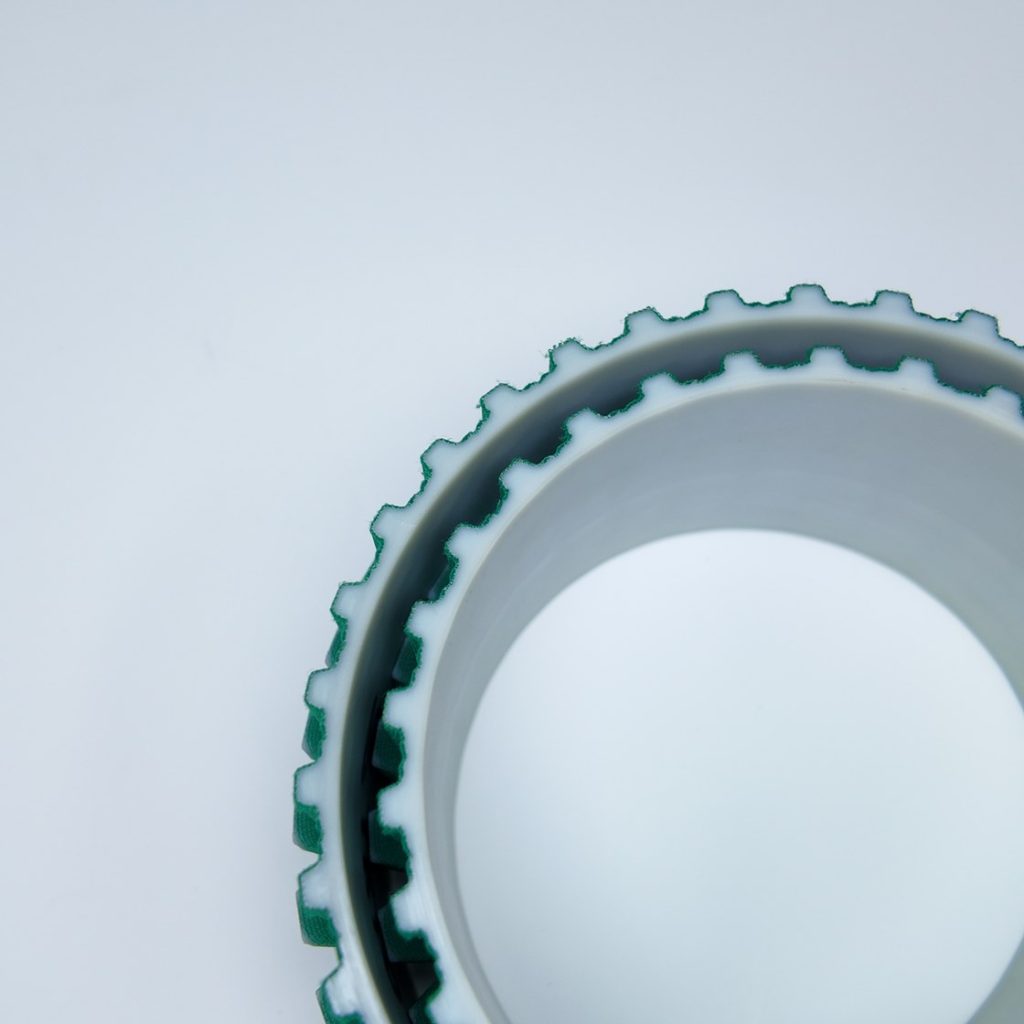
Do not substitute a supplier’s belt sample for the machine builder’s safety and performance sign-off. Keep any approved deviations and first-article results with the replacement part number to avoid future mismatched purchases.
Frequently Asked Questions
Is a timing belt stronger than a chain?
Not inherently. Capacity depends on the identified belt system or chain system, load, speed and design. Compare rated assemblies under the actual duty instead of assuming a universal winner.
Does a timing belt need lubrication?
A conventional dry synchronous belt generally does not need lubrication. Follow the actual belt and equipment manufacturer’s instructions; this does not remove the need to inspect pulleys, tension and surrounding components.
Can I replace a roller chain with a timing belt of the same pitch?
No. Matching a pitch number does not make a chain sprocket compatible with a timing belt. A conversion requires the correct belt profile, matching pulleys and engineering checks for the drive.
Does a timing belt maintain exact positioning?
Its positive tooth engagement supports synchronization, but positioning accuracy still depends on tooth clearance, tensile stiffness, shaft loads, pulley condition and the machine’s control system.
Which is easier to maintain: a timing belt or chain drive?
Many dry synchronous drives avoid chain lubrication tasks, while chains can be straightforward to service in plants equipped for them. Compare inspections, access, parts and actual downtime for the proposed systems.
Conclusion
The timing belt vs chain decision begins with the whole drive: load, motion, environment, shaft layout and maintenance—not the belt material alone. Where a conversion is justified, specify matched pulleys, a rated belt construction, suitable tensioning and an approved first-run check. Where those requirements cannot be met, retaining a properly maintained chain may be the sounder engineering decision.
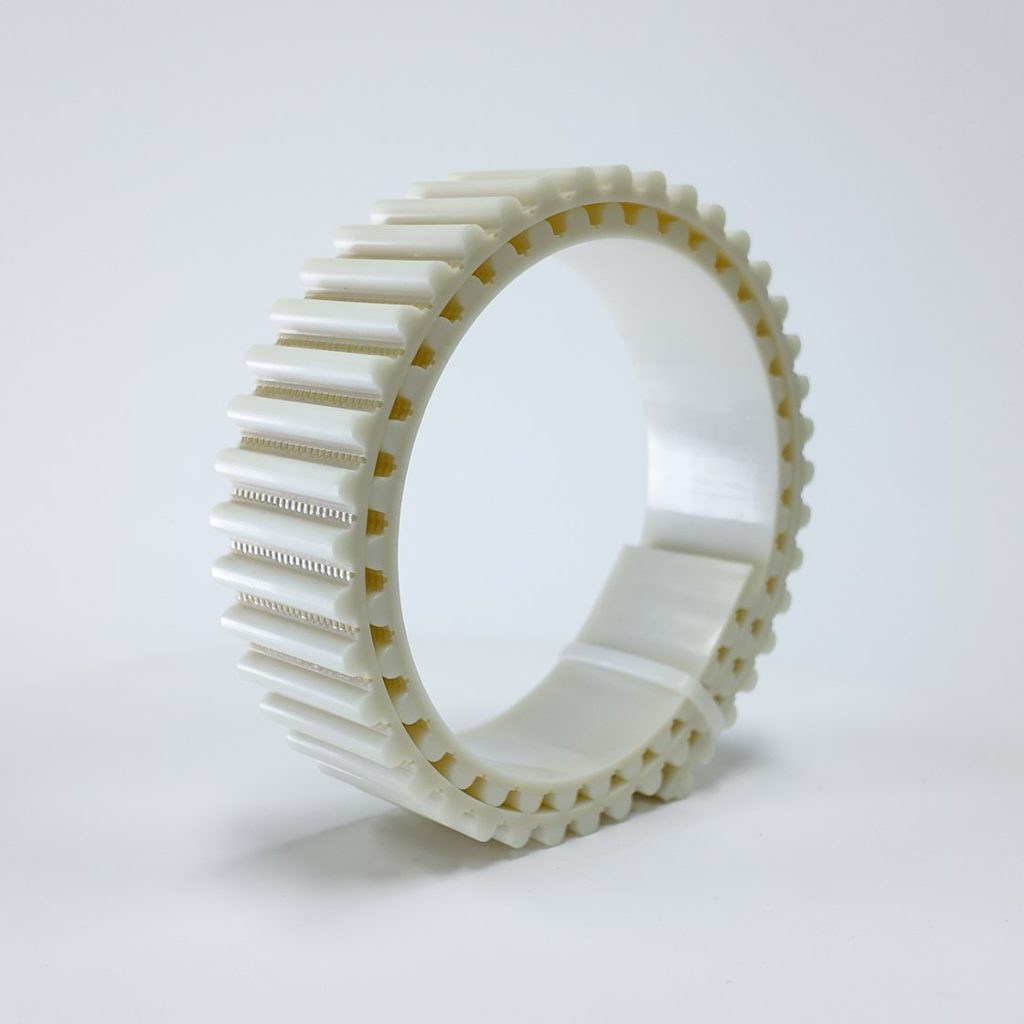
For a belt-component inquiry, LKBELT buyers can share the existing belt marking or proposed profile, pulley drawing, finished dimensions and operating conditions. For a chain-to-belt retrofit, complete the system-engineering review before requesting a particular belt construction.