
Belts for Metal Coil Processing
Identify the wrapper or tension station, then compare belt options around the strip surface, machine arrangement and operating conditions.
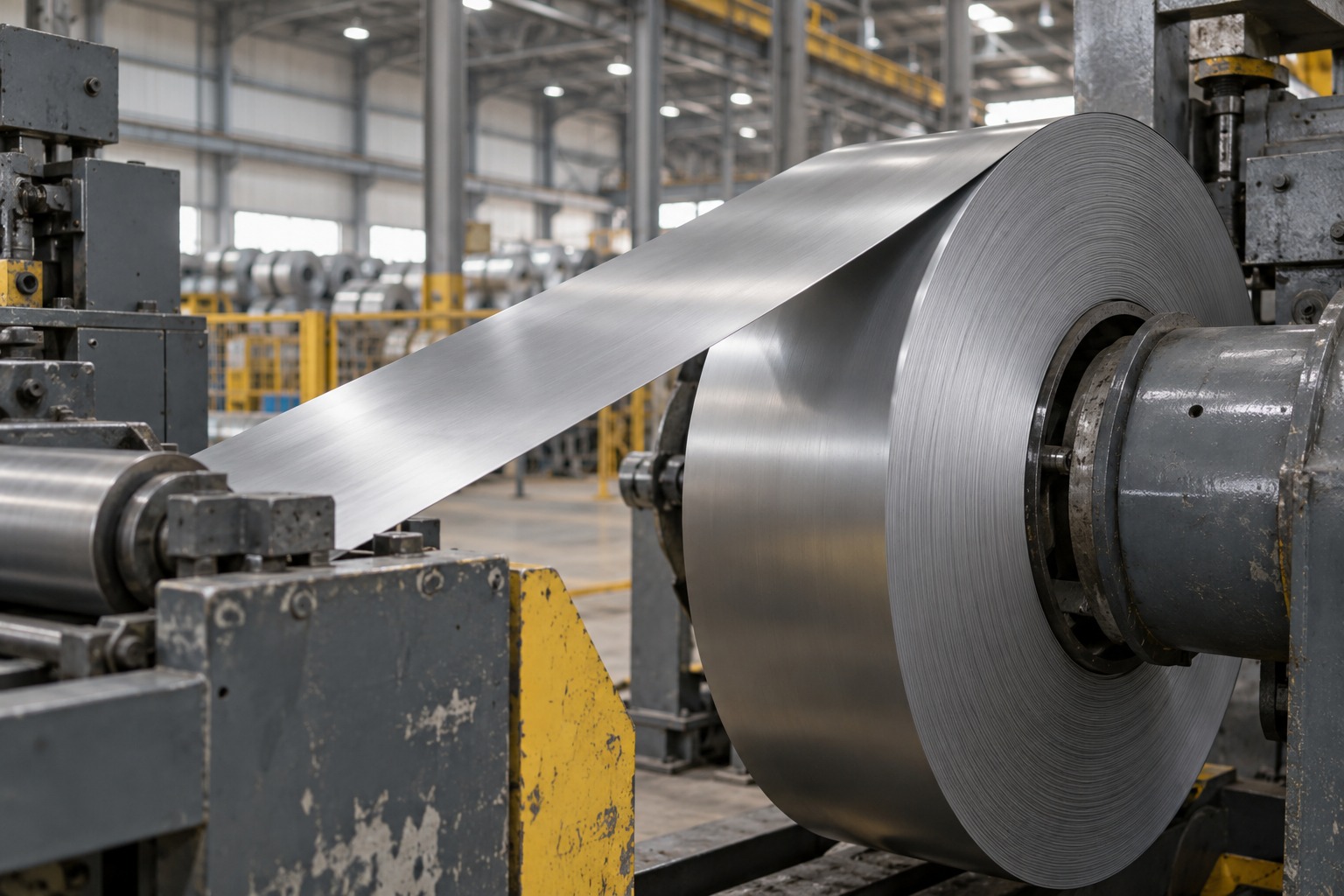
Where does the belt work?
Coil wrapper
At the start of coiling, a wrapper belt helps guide the strip head around the mandrel. Provide the wrapper arrangement and belt drawing.
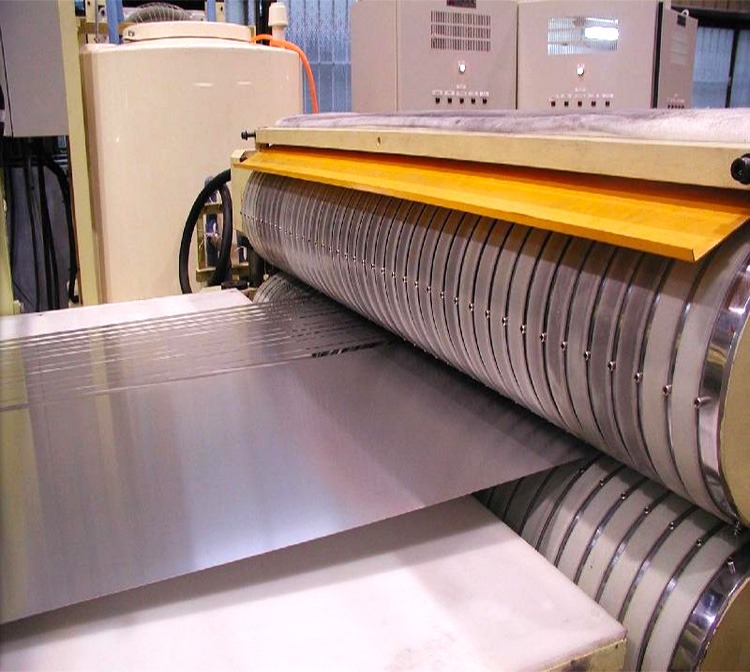
Slitting tension station
A tension station acts on passing slit strips before recoiling. Describe the contact path, dry or oil environment and any paired-belt requirement.
Give each layer a defined role
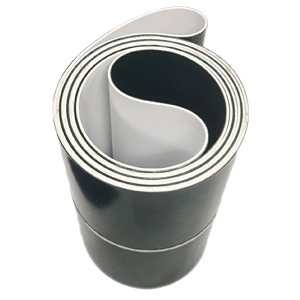
Steel Plate Wrapper Machine Seamless Tensile Belt
TPU / polyester braided fibre / PUThe existing wrapper reference describes a TPU surface, polyester braided reinforcement and a PU lower layer in a seamless construction. Discuss that build against the wrapper path and the strip-contact conditions.
Explore this productContact layer: review the strip interface
Relate the cover to strip material and finish, fluid exposure and actual contact temperature. A material name by itself does not define suitability for every rolling condition.
Reinforcement: review load and recovery
Keep the reinforcement, force/elongation behaviour and operating tension together. Compare data at stated conditions and retain the original units and test basis.
Lower face: review the machine interface
The belt also contacts rollers and machine-side surfaces. Include the installed path, reverse bending and guide details rather than specifying only the strip-contact cover.
Connect the strip, belt and machine geometry
| Working requirement | Engineering question | What to compare |
|---|---|---|
| Repeated bending | What are the smallest forward- and reverse-bend diameters on the actual belt path? | The complete construction’s bending limits and the real arrangement; the two directions can have different requirements. |
| Strip surface quality | Which face contacts the belt, and what surface acceptance criterion applies to the strip? | Cover finish and condition, contact arrangement, oil/contamination and marked-strip evidence, assessed together. |
| Fluid exposure | Which fluid is present, at what temperature and for how long? | Compatibility information for that construction and the actual exposure, not the general term “oil resistant”. |
| Tension response | Which force/elongation data describe the selected construction and measurement basis? | Force per unit width, the stated elongation, loading/recovery conditions and the station requirement; do not interchange units or test conditions. |
| Seamless or jointed reference | Which construction is specified by the original machine/belt reference? | The original construction and path. Being endless in shape is not, by itself, proof of a seamless manufacturing method. |
Describe the strip and its contact with the belt
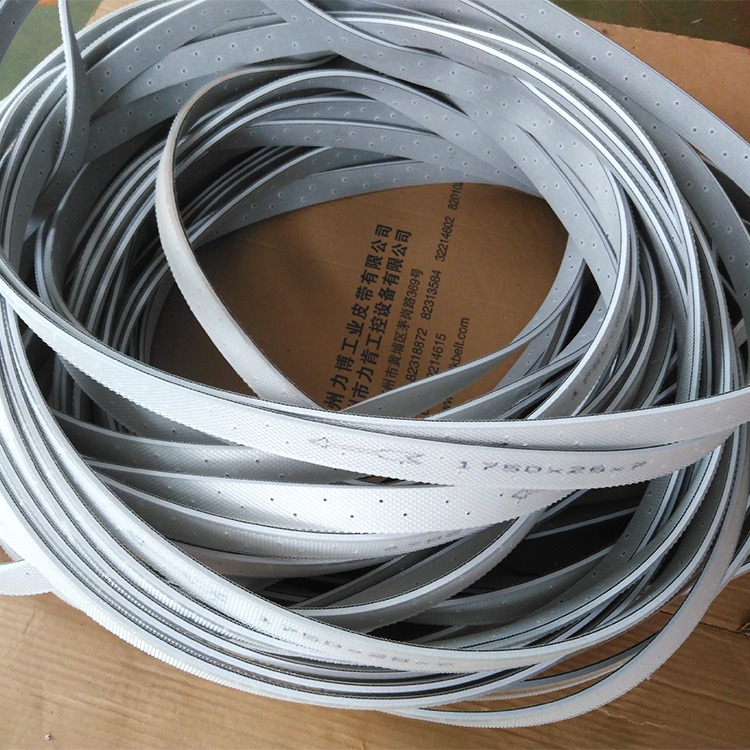
Strip material & finish
Identify the metal and finish, whether the strip is coated, and any marking you are investigating. Include a photograph and where the mark appears.
Oil, temperature & duty
Name the fluid in contact and record actual temperature, line speed and duty. Keep measured conditions with the product request.
Dimensions & arrangement
Provide circumference basis, width, thickness and roller geometry. Include reverse bends, clearances and whether the machine uses a matched belt set.
Replacement history
Keep the original belt code, wear photographs and recent maintenance together. Describe observations rather than assuming a single cause.
Build a separate record for each belt position
| Selection item | Coil wrapper | Slitting tension station |
|---|---|---|
| Machine function | Start-of-coil arrangement around the mandrel area. | Contact arrangement acting on slit strip before recoiling. |
| Drawing information | Wrapper path, mandrel and guide arrangement, clearances and original belt code. | Station path, roller/contact arrangement, original code and any matched-set requirement. |
| Material in contact | Strip material, finish, thickness and width; conditions during the coiling start. | Strip material and finish, strip sizes and the surface requirement after tensioning. |
| Operating environment | Oil or fluid exposure, actual contact temperature, line conditions and duty. | Dry or oil environment, fluid identification, contact temperature, line conditions and duty. |
| Finished belt record | Circumference basis, width, thickness, construction and drawing revision. | Dimensions, construction, set quantity and any machine-specified matching requirements. |
Keep data from separate stations separate. Similar dimensions or use on the same processing line do not make two belt positions the same selection.
Describe the finish that matters to your process
Record the strip requirement
Include the metal, coating or finish and the surface acceptance requirements used by your own process. Photographs help show which face contacts the belt and where the issue appears.
- State whether the observation is on the top, bottom, edge or repeated along the strip.
- Include a close photograph and a wider view locating it on the line.
- Record repeated spacing if observed, when the issue started and any recent line or material change.
Record the contact environment
Identify the actual fluid and operating conditions rather than using a general “oil resistant” or “metal industry” description.
- Name the oil, lubricant or cleaning product where known and describe how exposure occurs.
- Record contact temperature and duration, speed and duty, distinguishing measured data from estimates.
- Attach the station drawing and photographs so the strip path and belt contact can be reviewed together.
Show the failure pattern as well as the belt code
| Observation | What to include | Reference to keep with it |
|---|---|---|
| Marks on strip | Strip finish, mark photo, location and repeated spacing if present; belt-contact face. | Station position, fluid conditions and recent material or maintenance changes. |
| Edge damage or uneven wear | Whole-belt and edge close-ups, installed path and location of wear. | Original dimensions, guide/roller arrangement and drawing revision. |
| Layer separation or surface wear | Photos showing where damage begins and how far it extends; operating history. | Original construction, contact conditions and fluid/temperature record. |
| Inconsistent behaviour between belts | Identify the belts as a set if applicable, their positions and observed differences. | Set references, service history and the machine’s matching requirements. |
Agree how the proposed belt will be evaluated
Define the sample requirement and acceptance plan for your machine before a production decision. Keep each observation tied to the same construction, reference and operating conditions.
| Review stage | What to agree | Record to retain |
|---|---|---|
| Reference control | Identify the wrapper or slitting position, construction, drawing and any set requirement. | Sample/belt identity tied to the station configuration. |
| Dimensional review | Check finished circumference basis, width, thickness and relevant matched-set characteristics. | Measurement method, locations, units and agreed limits. |
| Application review | Use the real strip material/finish and documented fluid, contact temperature and duty. | The conditions used and the method for observing strip contact, belt behaviour and surface outcome. |
| Material data | If recovery, adhesion, hardness or fluid resistance is required, agree the exact property and method. | The selected construction, test conditions and report basis; do not substitute a different belt’s figures. |
| Production decision | Review observations against the agreed criteria before approving the construction. | Final reference, station arrangement and any change to the approved record. |
Discuss sample availability, the evaluation scope and any supporting test documentation with your inquiry. Keep the agreed method and criteria with the final drawing.
Keep the technical and purchasing details together
Technical reference to agree
Use one revision-controlled record for the belt you are requesting.
- Belt family and exact reference, construction, working face, underside and joint where applicable.
- Finished dimensions, measurement basis, tolerances and drawing revision.
- Machine position, operating conditions and any evaluation requirements.
Commercial details to request
Make the quotation specific to your quantity and destination.
- Requested quantity, sample requirement if needed, packaging and delivery destination.
- MOQ and sample availability for the actual request, not a general website assumption.
- Production lead time and transport time stated separately, with the requested date and delivery terms.
Prepare the right product conversation
Can I use one selection for wrapper and slitting positions?
Start with separate references. The machine position, contact route and belt function differ, so the construction and finished dimensions need their own review.
What helps investigate marks on strip?
Share the finish, a close photo of the mark, repeated spacing if observed, the belt face and station position, and when the issue began.
What should my dimension record include?
Supply the original drawing or code, full circumference with measurement basis, width and thickness. Add the roller arrangement and any required matched set.
Let’s discuss your belt requirements
Share the machine reference, installed belt position, dimensions and quantity you already have.
Useful details to have ready
- Machine model and original belt or part reference
- Length or circumference, width and thickness, with units
- Working conditions and the reason for replacement
View the inquiry preparation checklist
LKBELT — APPLICATION INQUIRY PREPARATION SHEET

1. MACHINE & PART IDENTIFICATION
Application:
Machine brand / model:
Machine section / installed belt position:
Original belt code / part number:
Drawing number / revision:
Required quantity / replacement or new machine:

2. DIMENSION RECORD (state units, preferably mm)
Full loop circumference:
Measurement basis (inside / outside / drawing / other):
Condition (new specification / used belt / installed belt):
Measurement method and instrument:
Width / measurement location:
Thickness / measurement locations / wear variation:
Teeth, pitch or cross-section if applicable:
Holes, pads, guides or other features:
Requested finished dimensions (keep separate from measured used-belt values):
Do not apply a universal length deduction, stretch allowance or tension value.

3. OPERATING CONDITIONS
Material handled / product dimensions or weight:
Speed and source of value (manual / measured / estimate):
Contact temperature and duration:
Oil / water / glaze / chemical / abrasive exposure:
Duty hours and load requirement:
Roller or pulley information from machine drawing:
Maintenance / lubrication system specified by machine maker:
Observed issue, when it started and recent maintenance:

4. APPLICATION-SPECIFIC INFORMATION
Treadmill: running belt or motor drive belt; deck condition; surface and underside.
Coil processing: wrapper or slitting tension position; strip material and surface;
dry or oil operation; station arrangement; paired belts if applicable.
Edge banding: feed/conveyor, upper pressure or drive position; machine part number;
teeth/holes/pads and panel contact face.
Ceramic: actual process, product handled, belt function and existing code;

5. LABELLED REFERENCE PHOTOS / DOCUMENTS TO PREPARE
A — machine label
B — whole installation and belt position
C — belt top / contact face
D — underside / tooth face
E — joint and markings
F — width, thickness and length measurement method
G — original drawing or machine manual reference
Disconnect power before physical inspection and follow the machine service manual.

6. COMMERCIAL REQUEST
Delivery destination:
Requested quantity / sample requirement:
Required date:
Packaging requirement:
Ask for MOQ, production lead time and transport time separately.
Confirm the final product construction and finished specification before ordering.
Get a Quote
Send your machine reference, belt dimensions and operating conditions. Add your required quantity and any available drawing.
Get a QuotePrefer to contact our team directly? Contact LKBELT