PU timing belt with cleats
This PU timing belt combines a toothed belt with projecting cleats. The product photograph shows a light-coloured belt back, a green tooth side and cleats with visible fasteners. For a replacement, send a drawing or sample showing the cleat shape and its position relative to the belt teeth.
| Item | Product details |
|---|---|
| Belt material | Polyurethane (PU) |
| Construction | Timing belt with cleats |
| Cleat layout | Shape, height and spacing to your drawing |
| Tooth profile | Match your pulley or existing belt |
| Belt size | Specify width and finished length or tooth count |
Include a close-up of the cleat attachment and the full belt marking with your inquiry.
Cleat dimensions and attachment
A cleated replacement needs to match both the pulley and the machine’s working layout. Show the position of each cleat on the belt, its orientation and any clearance limits around the machine. Include the attachment detail rather than relying on a photograph alone for the fixing dimensions.
| Drawing detail | Information to provide |
|---|---|
| Base belt | Tooth profile, width, finished length or tooth count, and joint requirement |
| Cleat shape | Height, width, thickness and contact-face shape |
| Position | Number of cleats, centre-to-centre spacing and alignment with the belt teeth |
| Attachment | Fixing method, hole positions and fastener details shown on your drawing or sample |
| Working conditions | Machine model, item being handled, load, speed, temperature and cleaning method |
Replacement for tobacco machinery
For a tobacco-machine inquiry, include the equipment model and existing belt part number together with the cleat drawing. The belt profile, cleat spacing and attachment arrangement need to match that machine’s assembly.
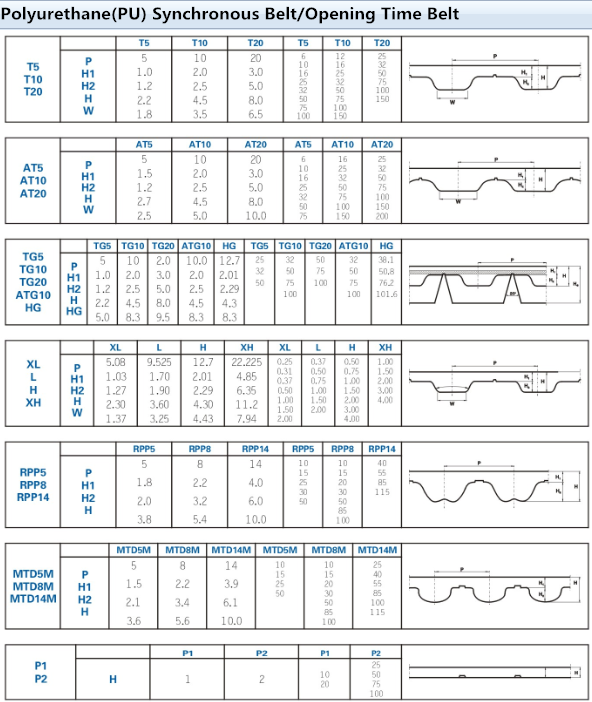
Timing belt profile illustration
Use the illustration to discuss tooth shape with your pulley drawing or belt sample. Cleat dimensions and finished-belt construction are specified separately.