
Two replacement belts can have the same width and similar coated surfaces, yet require different take-up travel or behave differently at a small transfer pulley. The difference may be in the fabric, the way it is built into the belt or the joint that completes the loop. Those details belong in the quotation alongside the dimensions.
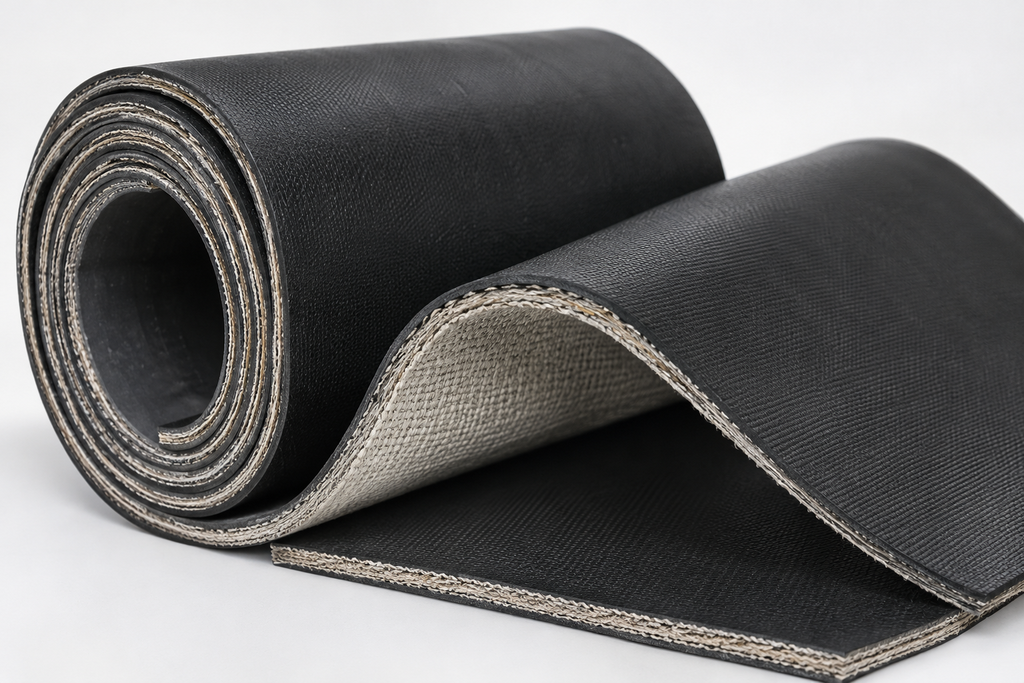
Conveyor belt reinforcement is the tension-carrying structure of the belt. In a fabric-reinforced belt, yarn selection, direction, weave and ply arrangement influence how the belt extends under load, holds its shape across its width and bends through the conveyor. Compare those properties for the finished construction, including the running side and joint.
What Is Conveyor Belt Reinforcement?
The carcass is the structural body that carries tension. In light fabric belting, it may consist of one textile reinforcement or several fabric plies bonded together. The carrying cover provides the contact surface for the product. The running side contacts the bed, rollers or pulleys and may be exposed fabric, treated fabric or a coating. An exposed fabric face can be part of the reinforcing structure, but its appearance cannot reveal the full internal build. Habasit Fabric Conveyor Belts Engineering Guide
LKBELT’s PBJ25-2M-B illustrates the difference between the two faces. The published treadmill belt has a black hairline-pattern PVC working face and a fabric-backed construction. These details help a buyer identify the surfaces of a replacement. Confirm the internal ply arrangement, fabric identity and tensile properties from the relevant specification. PBJ25-2M-B PVC treadmill belt
For an overview of other belt families and how their constructions differ, see the types of conveyor belts guide.
How Does Fabric Reinforcement Affect Belt Performance?
As the drive pulls the belt, the tension member carries longitudinal force and extends under load. For a replacement, ask how much force corresponds to the stated extension and under what test conditions. A force at a stated elongation describes stiffness over the relevant measurement conditions. Breaking strength describes a different limit. Request the allowable operating tension separately, including its basis and whether it applies to the joined belt.
Even when two belts carry the same working tension, their different extension behavior can affect the available adjustment range. On a conveyor with limited take-up travel, check the installation and operating requirements against the actual tensioning arrangement. If a proposal lists a tensile figure without saying whether it is a breaking value, a working value or a force at specified elongation, clarify the definition before comparing offers.
Across the width, the belt must hold a shape appropriate to its support and duty. A thin, wide belt may need enough lateral stiffness to remain flat, while a troughing belt must flex across its width to suit the supports. Longitudinal bending around a pulley is a separate requirement. A fabric selected for high tensile capacity still needs to pass the bending and joint checks for the actual route.
What Are the Main Conveyor Belt Reinforcement Materials?
Polyester. Polyester is widely used in light fabric belts. If the application needs stable length under load, compare the finished belt’s load–elongation data and available take-up travel. Polyester can appear in different yarn forms and fabric designs, so ask where it is used in the construction.
Nylon or polyamide. A design may use polyamide in one fabric direction or in a broader tension-member construction. When a supplier proposes it for a demanding mechanical duty, check the extension, bending and dimensional behavior for that build and operating environment.
Aramid. Para-aramid is used in some specialized tensile constructions. The complete belt still needs its own temperature and bending limits because the cover, bonding layers and joint also operate under those conditions.
Cotton and blends. Cotton can appear in specialty textile constructions. A fabric can also combine yarns to meet different needs in each direction or at a contact surface. Ask whether the named fiber describes the load-carrying yarn, the exposed fabric or both. That distinction matters when replacing a belt identified only by its backing.
LKBELT lists TC25-LK for textile machinery as a polyester conveyor belt with a green outer face and black fabric underside. For a replacement at that position, use the model as the starting reference and request the fabric and mechanical data required by the machine. The page describes the model and its faces. An internal yarn schedule and a tensile rating require separate documentation. TC25-LK textile machinery application
Watch the TC25-LK surface and underside
Close-up views of the TC25-LK sample’s green face, dark underside and edge. View TC25-LK product details ›
Why Do Warp, Weft and Fabric Weave Matter?
Warp runs lengthwise. Weft runs across the width. In a straight belt cut along the fabric direction, the warp typically contributes to the longitudinal load path, while weft design helps govern crosswise behavior. Each direction can use a different yarn or construction.
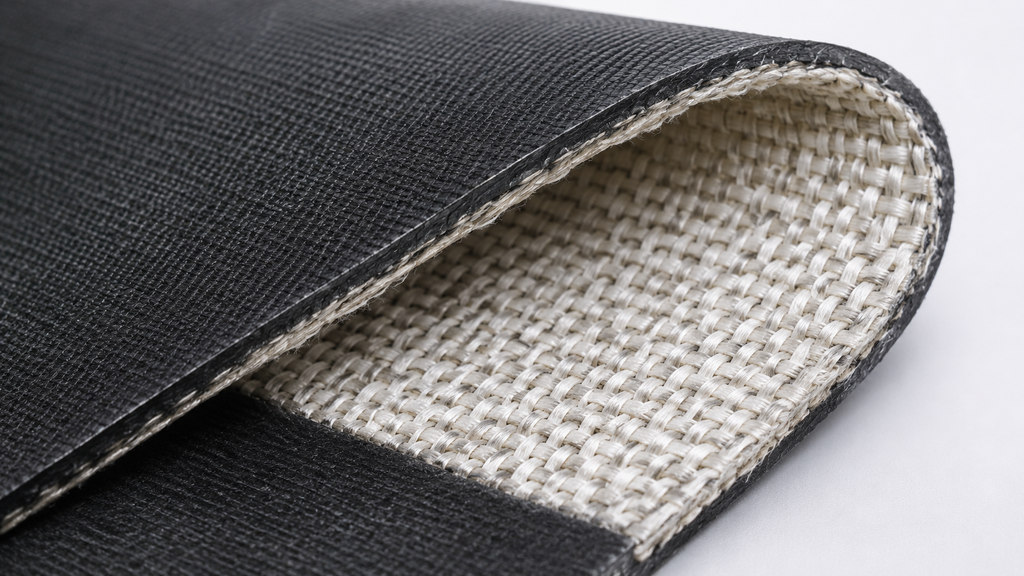
A spun yarn uses shorter fibers assembled into a thread. A multifilament yarn bundles several continuous filaments. A monofilament is a single continuous strand. Forbo documents belt fabrics that combine multifilament warp with monofilament weft. It also shows how yarn choice and interlacing can change the behavior of fabrics with the same broad weave name. Ask for the supplier’s definition of any fabric code on the quotation, including which direction each constituent describes. Forbo Fabric: Yarns, Weaves and Belt Characteristics
Single-Ply vs Multi-Ply Conveyor Belts
Ask what the supplier counts as a ply. A belt described as single-ply can still have a cover and a distinct running-side treatment. A multi-ply belt may contain separate fabric plies bonded into the carcass. An interwoven textile can itself contain multiple yarn levels within one integrated fabric. A useful construction schedule identifies both the fabric architecture and how many separate textile plies the finished belt contains.
Two proposals that both say “two ply” can use different yarns, fabric weights, bonding layers and covers. These choices can alter stiffness, load–elongation behavior and bending suitability. Compare the stated working limits and the approved pulley and joint conditions for each finished model. Total thickness is a dimensional check. Specify cover thickness separately where wear allowance, surface behavior or clearance makes it relevant.
LKBELT lists R-2M0845-AG as a double-fabric PU flat belt with a total thickness of 4.5 mm. The product photos show the carrying face, fabric underside and layered edge. The model, fabric construction and thickness give buyers a specific build to compare. For a proposed substitute, request its allowable working tension and approved bending limits as separate data. R-2M0845-AG double-fabric PU conveyor belt
Three views of the R-2M0845-AG belt


Include these three views when sending a replacement enquiry: the carrying face, running side and edge. Add a separate joint photograph and the original model reference.
View R-2M0845-AG dimensions and details ›The running side deserves a separate line in the comparison. On a slider bed, it slides against a specified bed material and finish. Compare the actual contact pair and the effects of contamination and cleaning. On roller supports, check how the belt spans between rollers, where it wraps, and which surface touches each roller. An underside that works on one bed may produce different drag, noise or wear on another.
How Does Reinforcement Affect Pulley and Joint Compatibility?
Record the tightest bends in the route and show which face contacts each pulley or nosebar. Reverse bends load the layers in the opposite sense. A small transfer can require a belt and joint qualified for repeated flexing at that location. Ask for the permitted diameters or nosebar conditions for the finished build and intended direction of bending. The conveyor layout also determines installation access and the space available at the splice. Conveyor components and belt compatibility
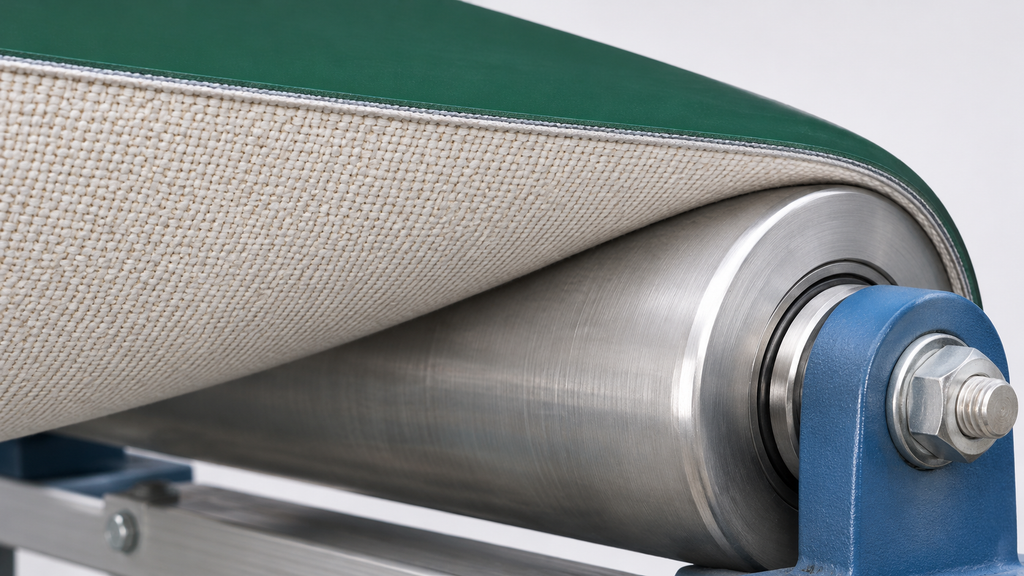
A joint transfers tension across the ends of the carcass. A finger joint interlocks shaped ends. A step or lap construction transfers load through an overlap prepared for the belt design. A mechanical fastener grips the belt locally and needs suitable retention, clearance and compatibility with the pulleys. Ask how the load passes through the proposed joint and what finished thickness and bending conditions apply there.
An otherwise suitable belt can be a poor replacement if the splice passes a nosebar or scraper outside its approved conditions. Ask for the joining method for the exact belt and duty. Habasit’s fabrication guidance illustrates the range of methods a manufacturer may offer for different constructions. Confirm the method approved by the supplier of the belt you are buying. Habasit belt engineering and fabrication
Conveyor Belt Reinforcement Selection Matrix
| Construction or selection issue | Mechanical consideration | Application implication | What buyers should verify |
|---|---|---|---|
| Yarn material and form | Fiber, yarn form and fabric design influence the response under load | Similar material labels may suit different duties | Exact model and documented fabric or carcass designation |
| Warp and weft | Longitudinal response and crosswise stiffness serve different functions | Flatness or troughing can matter alongside tensile behavior | Direction of each yarn and required transverse behavior |
| Ply and bonding arrangement | Fabric architecture, covers and bonding contribute to the finished build | Equal ply counts can behave differently through the route | Construction schedule, finished thickness and allowable working tension |
| Load and elongation | Extension influences tensioning and available travel | A constrained take-up can limit replacement choices | Load–elongation basis, working limit and take-up requirements |
| Running-side contact | Bed material, finish and underside govern contact | A slider bed and roller support impose different conditions | Underside specification, support geometry and environmental exposure |
| Bending and joint | Belt and joint repeatedly flex at transfers and return bends | A transfer that fits the belt body must also accommodate the joint | Approved bend conditions, splice design, thickness and access |
Two Practical Industrial Selection Scenarios
Compact packaging transfer
Suppose two quotations show similar carrying surfaces for a short transfer conveyor. The transfer uses a small end pulley and the return path includes a backside idler. Ask both suppliers to check the same route drawing and identify the permitted forward and reverse bends for the proposed build. Include the proposed joint and its finished thickness in that review. The candidate that meets the required working tension also needs to pass through the transfer without violating its documented bend or clearance limits.
Textile conveyor replacement on an existing bed
Suppose a textile line needs a belt to fit the original slider bed and take-up. The removed belt has an exposed fabric underside and an intact part marking. Record the bed material, condition, load and operating cycle, then ask for the original construction and its load–elongation data. Compare the candidate’s running side and the required take-up range. Include the joint and any surface condition that affects the textile being handled. Photographs help match the visible surfaces. Use the drawing and data sheet to confirm the properties that cannot be seen.
What Should Buyers Specify Before Ordering?
Send each supplier the same drawing and duty so the quotations can be compared. Include:
- Original model, machine position, drawing revision, quantity and installation access.
- Carrying-side material, coating, surface finish and required product contact behavior.
- Reinforcement designation, fabric arrangement, ply count as defined by the supplier, and running-side construction.
- Finished width, overall thickness and length reference, plus cover thickness and tolerances where required.
- Support type and contact materials, pulley diameters, nosebar details, reverse bends and available take-up travel.
- Operating load, speed, duty cycle, temperature, cleaning and exposure conditions.
- Joint type and finished thickness, attachments and any restrictions at the transfer.
- Current data sheet, applicable test method and load–elongation information, plus labelled photographs of the faces, edge and joint.
Ask the supplier to flag substitutions in the carcass, running side or joint. That gives engineering a specific difference to review before approving the replacement.
Frequently Asked Questions
What is the tension member in a fabric conveyor belt?
It is the structural reinforcement that carries the belt’s tensile load. Its configuration varies with the model and intended application.
Is a two-ply conveyor belt always stronger than a single-ply belt?
Compare documented allowable tension for the specific constructions and their joints. Ply count alone gives too little information to rank them.
How should buyers compare polyester and nylon reinforcement?
Ask where each fiber is used and compare finished-belt extension, bending behavior and suitability for the environment.
Does reinforcement affect minimum pulley diameter?
It contributes to bending behavior along with the other layers and attachments. Verify the approved limits for the belt and joint, including any reverse bending.
Can two belts with the same dimensions have different reinforcement?
Yes. Use the original identification and a construction schedule to compare what is inside each belt.
Conclusion
Compare fabric construction in both directions and review how the finished belt extends under load, bends through the route and runs against its supports. Use the approved joint and operating requirements to complete the comparison.
When comparing options from the LKBELT conveyor belt range, ask which construction meets the required working tension, bend path and joint conditions. For a quotation, send the original belt identification and drawing, reinforcement requirements, and machine specifications, including the support and pulley layout. Contact LKBELT for an industrial belt quotation