
Belts for Photovoltaic Equipment
Review elastic transmission belts by machine position, contact face and installed geometry. Start with the existing belt marking and the process stage before comparing surface options.

Identify the belt’s job before choosing its surface
Photovoltaic production equipment can use a belt for a driven roller, a transfer position or another machine function. Mark the exact installed location and the component that touches the belt; the machine drawing is more useful than an industry label alone.
For an elastic flat belt, distinguish the free belt length from its installed path. Include pulley diameters, centre distance and available tension adjustment so the intended fit can be discussed.
Machine position
Photograph the installed belt and identify the equipment model and process stage.
Contact face
Show both sides of the belt and which face touches the component or pulley.
Drive layout
Record pulley sizes, centre distance, belt width and fitting access.
Acceptance
State surface marking limits and any electrical test requirement used by your line.
Separate transfer contact from the drive
| Machine position | Belt duty | Information to confirm |
|---|---|---|
| Belt face touching the component | Conveys or supports the workpiece at a defined position. | Component type, permissible marks, contact face, cleaning and transfer geometry. |
| Elastic transmission position | Transfers motion through an installed flat-belt drive. | Free length, installed length, pulley arrangement, adjustment and joint. |
| Station with static-control requirement | Needs the machine’s electrical requirement checked with the selected belt. | Target resistance, measurement method and grounding arrangement; request confirmation for the finished reference. |
Connect the application to the exact belt
These existing product pages show distinct visible surface configurations. Match the exact model, face and machine duty; do not infer electrical performance from colour.
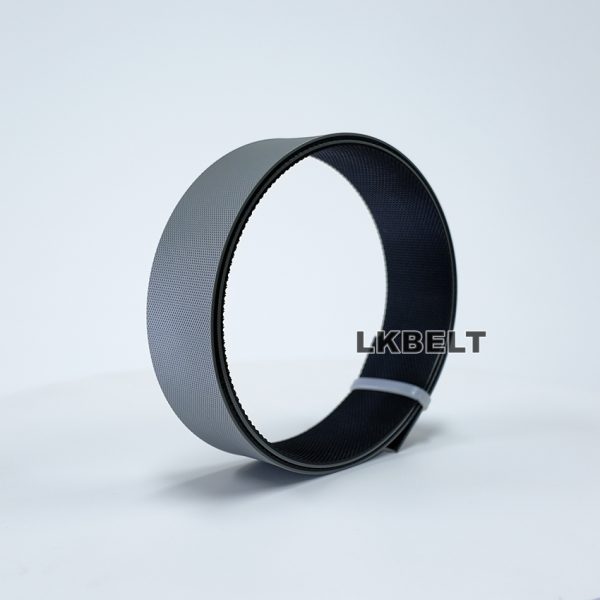
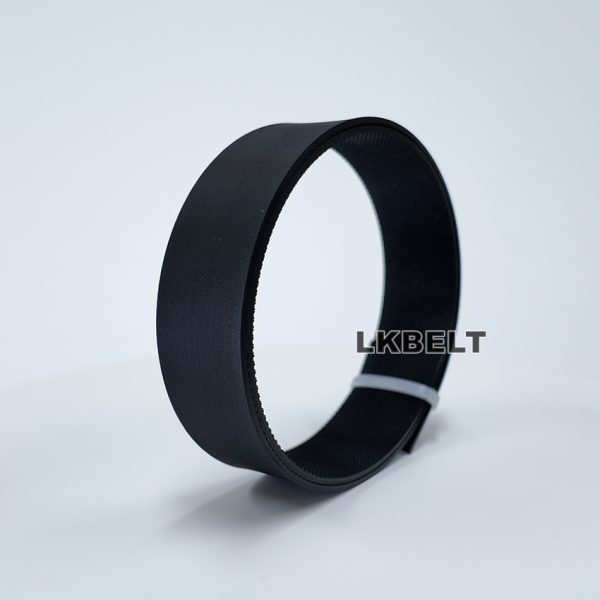
Record the conditions at the exact station
Workpiece contact
Identify the component and allowable surface marks. Include a sample or photographs of the contact face.
Electrical requirement
If static control is required, give the resistance range, test method and grounding arrangement for the machine.
Operating environment
List cleaning agents, process deposits, temperature and duty cycle.
Installation
Provide free and installed lengths separately, along with fitting access and tension adjustment.
Record the finished reference and its environment
| Detail | Information to provide |
|---|---|
| 设备 | Machine make/model, process stage and installed belt position |
| Existing belt | Full model marking, photographs of both faces and joint |
| Finished belt | Width, free length, installed path length and thickness with units |
| Drive | Pulley diameters, centre distance, wrap and adjustment range |
| Request | Quantity, destination and any surface or electrical acceptance criteria |
Review the specified belt on your machine
Confirm identity
Compare the belt marking, surface and dimensions with the approved machine reference.
Check installation
Confirm fitting method, length and tension adjustment without transferring a nominal value from another line.
Record the result
Use your normal line test to check contact marks, tracking and any electrical requirement stated in the request.
Photovoltaic equipment belt questions
Does a black belt automatically meet an antistatic requirement?
No electrical value follows from colour. State the resistance target and test method so the finished reference can be checked.
Which length should be quoted?
Send the free belt length and the installed path separately, with the measurement basis and pulley arrangement.
Can two belts with similar model text be substituted?
Confirm the exact face, construction and installed dimensions against the original sample or drawing.
Send the machine reference and belt details
Tell us the process stage, belt position and component contact, then add the existing belt code, photographs, finished dimensions and quantity. Include any surface-marking or electrical test requirements used by your equipment.
Send your drawing or original belt reference
Include the quantity, delivery destination and any sample approval requirements. Photographs of the belt and installed position help our team review the construction.
Get a Quote