
Treadmill Running Belts
Choose the running belt with the deck, rollers and intended use in mind. Start from your machine reference and the belt you need to replace or specify.
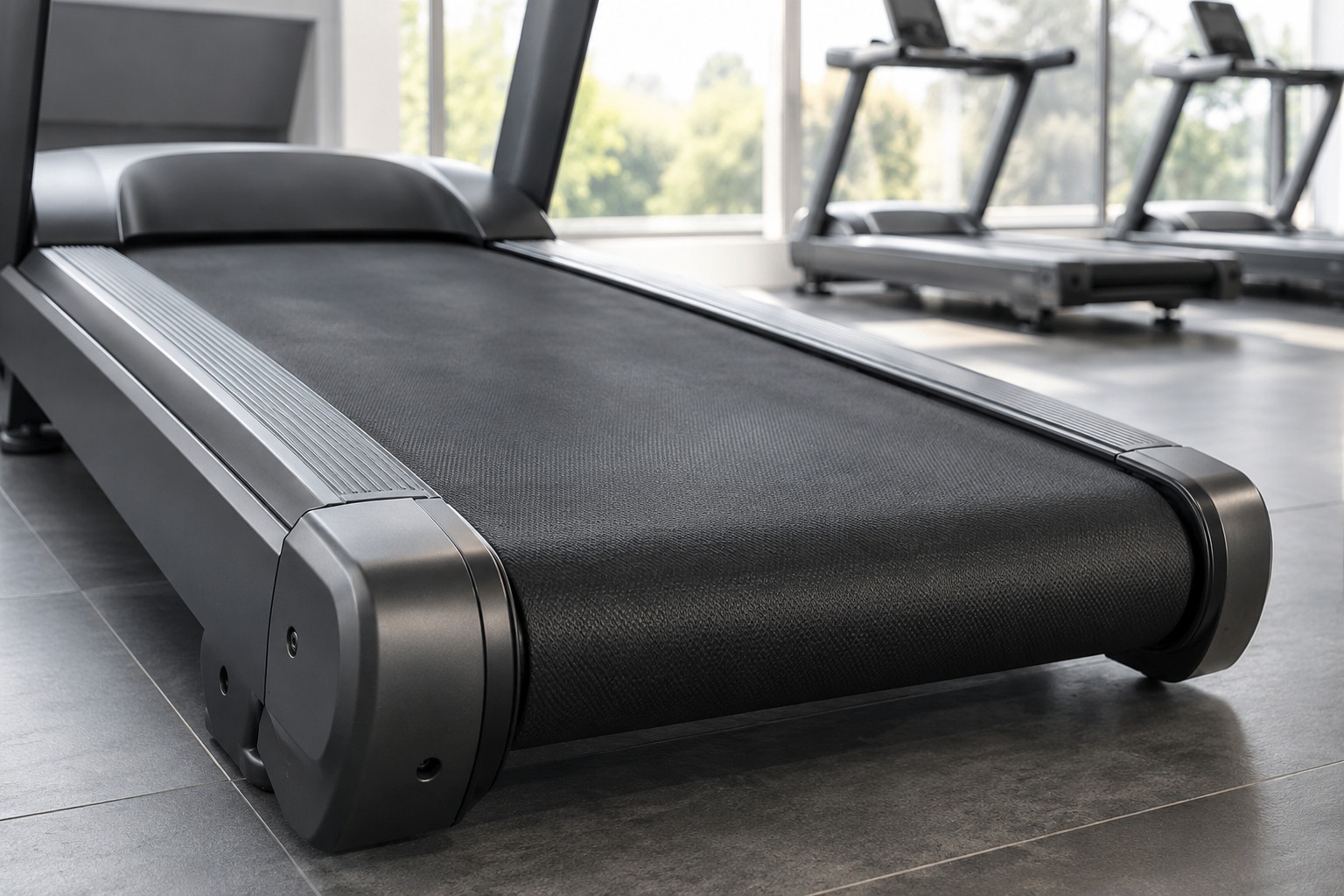
Look at the whole belt–deck system
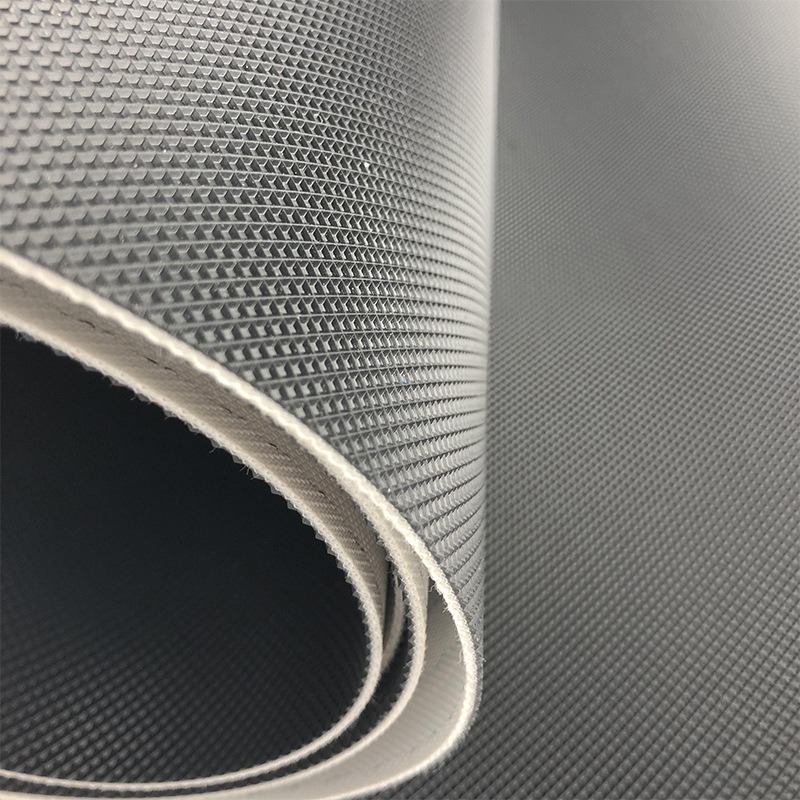
Running surface
Record the pattern and intended walking or running use. The surface is the shoe-contact face, so include the original texture reference.
Underside & deck
Describe the underside and the deck’s maintenance system together. Provide the machine maker’s lubrication instructions.
Belt & rollers
Review circumference, construction and finished thickness alongside the roller arrangement and original machine drawing.
Black Diamond Treadmill Belt
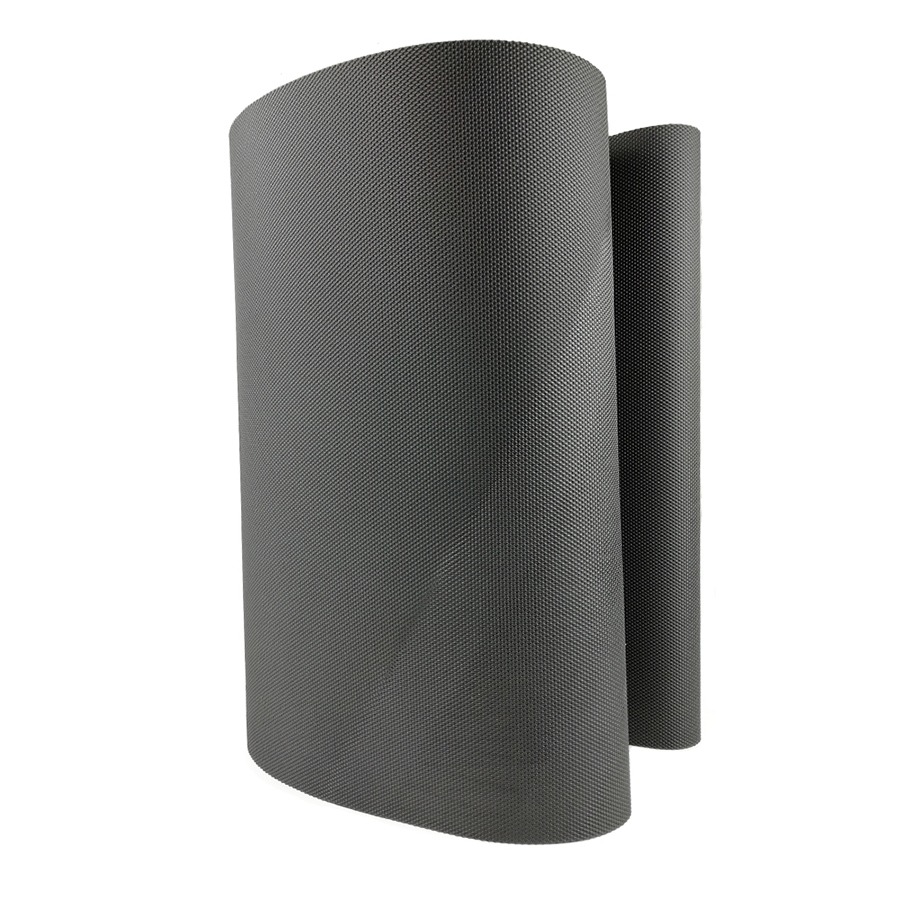
Size, pattern and thickness options
Discuss your required dimensions and running surface using the Black Diamond reference. Include the original drawing, underside requirements and machine information so the finished specification can be reviewed together.
View Product Details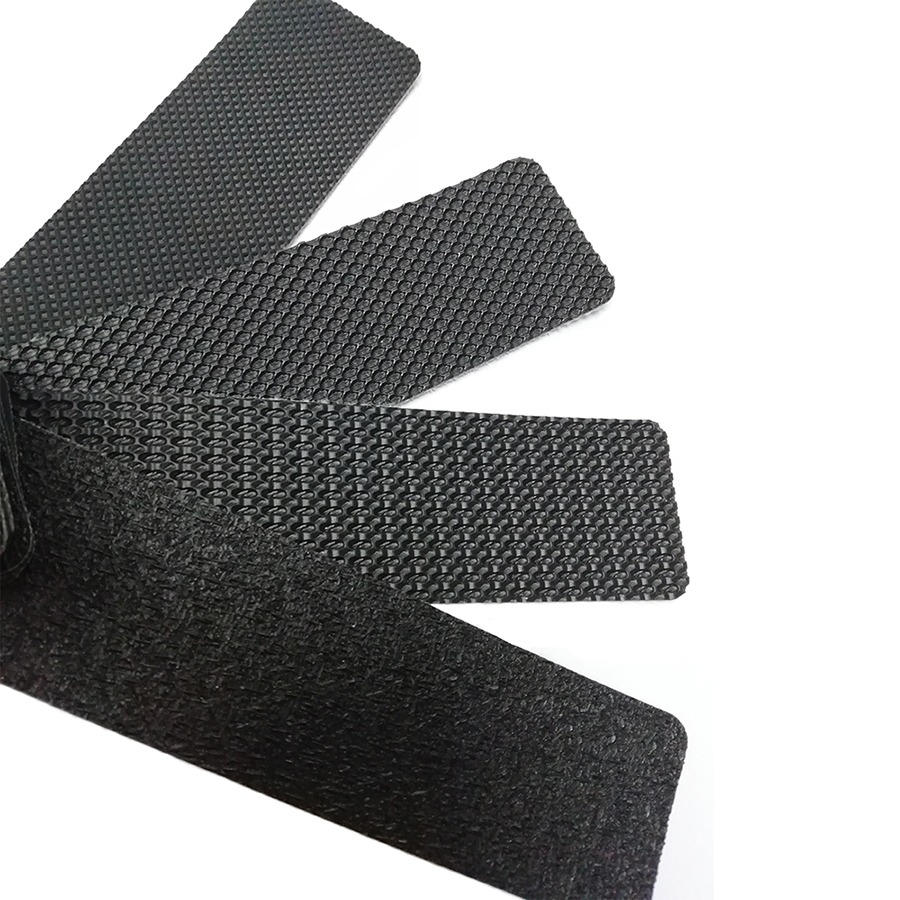
Choose the right starting point
For a new machine or OEM request
Begin with the intended machine configuration and its belt drawing. Define the operating duty and how the belt will be assessed on the equipment before deciding on a finished construction.
- Provide the drawing number and revision, roller arrangement, deck material and maintenance system.
- State the intended speed, duty, load requirement, working environment and target quantity.
- Identify what needs to be reviewed: dimensional fit, tracking, belt/deck behaviour, joint and operating observations under agreed conditions.
- Keep the selected construction and drawing revision together in the approval record. A surface sample alone does not describe the entire belt.
For an existing belt replacement
Begin with the machine model and original part reference, then record the condition of the installed belt and deck. Separate the symptoms that prompted replacement from the new-belt specification.
- Photograph the machine label, installed position, top surface, underside, joint and markings.
- Label measurements as installed, removed or drawing-derived, and identify whether the belt is used or new.
- Record the deck condition, maintenance history and when slipping, noise or tracking changes began.
- Compare the original reference and the full construction. A similar texture or a matching width does not establish the finished replacement specification.
Specify three jobs, not just a surface pattern
Black Diamond Treadmill Belt
PB25-15/A20This patterned PVC/fabric belt reference includes size, pattern and thickness customization. Select one complete construction for the drawing, including the running face, fabric build, underside and joint.
Explore this productThe running face manages shoe contact
Pattern and surface material describe the upper interface. Discuss intended use and the original texture, then assess the selected belt on the actual machine rather than inferring grip from the pattern name.
The reinforcement carries tensile load
The fabric build contributes to the belt’s load/elongation behaviour. Fabric-ply count is one construction detail; it does not replace the selected belt’s tension data or finished dimensional requirements.
The underside works against the deck
Sliding behaviour depends on the selected underside and the deck/maintenance system. Treat the top-face requirement and the underside requirement separately, then review their combination.
Understand the choice behind each dimension
| Input | Effect to review | Selection trade-off |
|---|---|---|
| Thickness & roller size | The belt bends around the rollers on every circuit. Review the selected construction’s minimum roller requirement, including reverse bends where present. | Adding thickness can change bending behaviour. Compare the full build rather than treating thickness alone as a durability upgrade. |
| Finished circumference & tension | The length basis and installed tensioning arrangement affect how a replacement is specified. | A used belt may have changed in service. Do not automatically reproduce its measured length or apply an unrelated deduction. |
| Top surface & underside | The top works with shoes; the bottom works with the deck. These are different contact requirements. | A desired upper texture does not establish suitable underside behaviour or maintenance instructions. |
| Joint & direction | A finished loop includes joint geometry, thickness and any direction marking. | Keep the joint reference and roller compatibility in the same drawing review instead of approving a surface sample alone. |
Prepare a clear measurement record
A · Running beltThe wide moving surface above the deck
B · DeckThe stationary support beneath the top belt run
C · Motor drive beltA separate component linking motor and roller
Width & thickness
Record edge-to-edge width and thickness with units, instrument and measurement position. Note worn areas or variation.
Full circumference
State the length basis and whether it comes from a drawing, an installed belt or a removed used belt. Exposed deck length is not the full belt circumference.
Both faces & joint
Photograph the running surface, underside, joint, markings and any direction arrow. Keep those photographs with the machine model and original part code.
Machine & maintenance
Include the deck condition, roller information and maintenance instructions. Disconnect power before physical inspection and follow the machine service procedure.
Compare more than length and width
Same size, different underside
Two belts can have similar dimensions but different deck-contact requirements. Review the underside and maintenance system along with the running face.
Thickness & roller geometry
Review thickness with construction and the roller arrangement. A thicker replacement is not automatically the appropriate option.
Surface pattern & intended use
Use a sample or clear photograph to identify texture. Keep the surface choice with the complete construction and intended machine duty.
Keep the surface, underside and joint in the same specification
The running surface is one part of the belt
Use a photograph or sample reference to describe the pattern. Review the pattern together with the finished dimensions and complete construction.
- Record the intended walking or running use and the original surface reference.
- Identify the fabric/ply or construction code from the original documentation when available.
- Provide the joint photograph, any direction marking and the required dimensional basis.
The deck-contact system needs its own reference
Share the original underside and the maintenance instructions for the installed deck and belt combination.
- Identify whether the machine documentation specifies a lubricated, waxed or other maintenance system.
- Do not transfer a lubricant, quantity or maintenance interval from an unrelated treadmill.
- Request written maintenance requirements for the agreed construction before installation.
Turn a symptom into useful evidence
Describe what you observe before deciding what to replace. The belt, deck, rollers and machine setup form one operating system; a new belt alone does not identify the cause of a machine fault.
| Observation | Details worth recording | Questions for the review |
|---|---|---|
| Slipping during use | When it happens; speed or duty at the time; original reference; deck condition; recent maintenance. | Is the movement associated with the wide running belt or the separate drive belt? What has changed since the machine last operated normally? |
| Tracking toward one side | Which side; edge wear; installed and roller photographs; whether it began after replacement or maintenance. | Are the reference dimensions and construction consistent with the original drawing, and what machine-service inspection is required? |
| Noise or uneven wear | Where it occurs; wear pattern; top, underside and joint photos; deck maintenance history. | Which contact area corresponds to the observation? Is the belt construction and maintenance system correctly identified? |
| Joint or edge damage | Close and overall views; location of damage; service history; any contact with adjacent components. | What do the joint and edge photographs show, and which installed clearances or components need inspection? |
Keep maintenance or adjustment work with the equipment maker’s service instructions. Include observations in your inquiry without changing the measurements to compensate for a suspected fault.
Agree how the proposed belt will be evaluated
Define the sample requirement and acceptance plan for your machine before a production decision. Keep each observation tied to the same construction, reference and operating conditions.
| Review stage | What to agree | Record to retain |
|---|---|---|
| Reference control | Identify the proposed construction, drawing revision, size basis and joint. | One agreed belt record tied to the machine configuration. |
| Incoming check | Check dimensions, surface, underside, markings and joint against the agreed record. | Measured values with method, units and agreed acceptance criteria. |
| Machine review | Following the machine service process, observe fit, tracking and belt/deck behaviour under defined conditions. | Machine configuration, duty, maintenance system and the observation method. |
| Performance claim | If noise, energy or life is part of the requirement, define how the comparison will be made. | A baseline, controlled conditions, measurements and an agreed evaluation period. |
| Production decision | Confirm the reviewed construction and any agreed changes before the order. | Final drawing revision, sample identification and the purchasing specification. |
Discuss sample availability, the evaluation scope and any supporting test documentation with your inquiry. Keep the agreed method and criteria with the final drawing.
Keep the technical and purchasing details together
Technical reference to agree
Use one revision-controlled record for the belt you are requesting.
- Belt family and exact reference, construction, working face, underside and joint where applicable.
- Finished dimensions, measurement basis, tolerances and drawing revision.
- Machine position, operating conditions and any evaluation requirements.
Commercial details to request
Make the quotation specific to your quantity and destination.
- Requested quantity, sample requirement if needed, packaging and delivery destination.
- MOQ and sample availability for the actual request, not a general website assumption.
- Production lead time and transport time stated separately, with the requested date and delivery terms.
Before selecting your running belt
Is the running belt the motor drive belt?
No. The running belt is the wide surface above the deck. The shorter belt linking the motor and roller is a separate component with its own code and dimensions.
Can I order by treadmill model alone?
Send the model as a starting point, together with the original part number or drawing, dimensions and photos. Machines can have variants or modified components.
Should I use the measured length of an old belt?
Record it with the measurement method, but identify it as a used-belt value. Keep it separate from the required finished size because the old belt may be worn or stretched.
Let’s discuss your belt requirements
Share the machine reference, installed belt position, dimensions and quantity you already have.
Useful details to have ready
- Machine model and original belt or part reference
- Length or circumference, width and thickness, with units
- Working conditions and the reason for replacement
View the inquiry preparation checklist
LKBELT — APPLICATION INQUIRY PREPARATION SHEET

1. MACHINE & PART IDENTIFICATION
Application:
Machine brand / model:
Machine section / installed belt position:
Original belt code / part number:
Drawing number / revision:
Required quantity / replacement or new machine:

2. DIMENSION RECORD (state units, preferably mm)
Full loop circumference:
Measurement basis (inside / outside / drawing / other):
Condition (new specification / used belt / installed belt):
Measurement method and instrument:
Width / measurement location:
Thickness / measurement locations / wear variation:
Teeth, pitch or cross-section if applicable:
Holes, pads, guides or other features:
Requested finished dimensions (keep separate from measured used-belt values):
Do not apply a universal length deduction, stretch allowance or tension value.

3. OPERATING CONDITIONS
Material handled / product dimensions or weight:
Speed and source of value (manual / measured / estimate):
Contact temperature and duration:
Oil / water / glaze / chemical / abrasive exposure:
Duty hours and load requirement:
Roller or pulley information from machine drawing:
Maintenance / lubrication system specified by machine maker:
Observed issue, when it started and recent maintenance:

4. APPLICATION-SPECIFIC INFORMATION
Treadmill: running belt or motor drive belt; deck condition; surface and underside.
Coil processing: wrapper or slitting tension position; strip material and surface;
dry or oil operation; station arrangement; paired belts if applicable.
Edge banding: feed/conveyor, upper pressure or drive position; machine part number;
teeth/holes/pads and panel contact face.
Ceramic: actual process, product handled, belt function and existing code;

5. LABELLED REFERENCE PHOTOS / DOCUMENTS TO PREPARE
A — machine label
B — whole installation and belt position
C — belt top / contact face
D — underside / tooth face
E — joint and markings
F — width, thickness and length measurement method
G — original drawing or machine manual reference
Disconnect power before physical inspection and follow the machine service manual.

6. COMMERCIAL REQUEST
Delivery destination:
Requested quantity / sample requirement:
Required date:
Packaging requirement:
Ask for MOQ, production lead time and transport time separately.
Confirm the final product construction and finished specification before ordering.
Get a Quote
Send your machine reference, belt dimensions and operating conditions. Add your required quantity and any available drawing.
Get a QuotePrefer to contact our team directly? Contact LKBELT